
Price is not the first step. How we approach B2B inquiries
A good mushroom raw material starts with questions, not a price list. Using a real inquiry, we show how we match the form, markers and EU compliance before we quote anything.
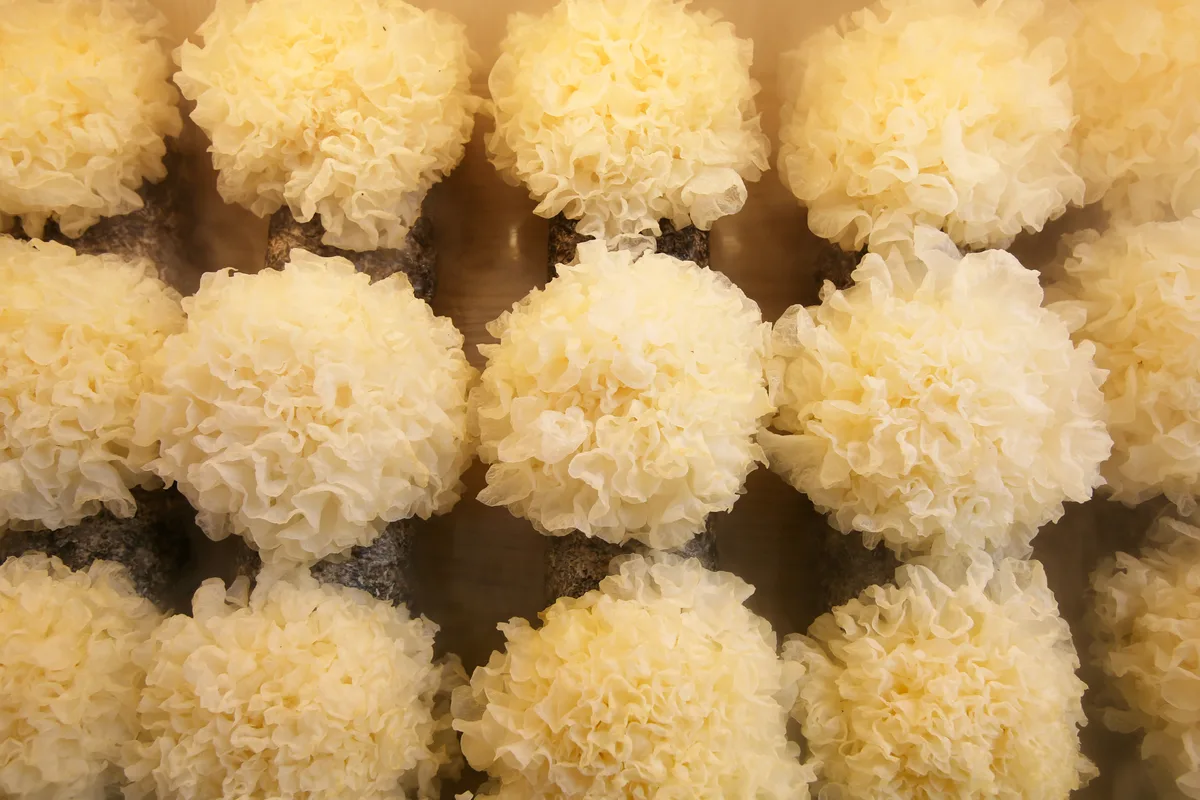
Mushroom raw material is matched to the product, not to a price list.
Version 1.0 · Published: 02.06.2026
Subject-matter reviewer: Yi · functional mushroom technologist
Aloha Fungi received an inquiry from a dietary supplement manufacturer: the materials sought were Agaricus Blazei and Tremella, with a request for a price quote across volumes, a specification, lead time and sample availability. A model inquiry, and a great occasion to show how we actually work. Because before we give a price, we agree on the product direction.
In short (60 seconds)
- 💬 We don’t start with price. First we agree on the product direction, so we offer the right raw material, not just a number.
- 🍄 Mushroom raw material is not a standard plant extract. The specification depends on the final format, processing performance and EU contaminant requirements.
- ⚠️ EU compliance: for example, Agaricus Blazei can carry a higher heavy-metal risk (especially cadmium), depending on the source and cultivation conditions. The method and specification are chosen so the product meets EU requirements.
- 🔬 Markers differ between species: for Agaricus Blazei we focus on beta-glucans; for Tremella the key fraction is Tremella polysaccharides (heteropolysaccharides), not beta-glucans.
- 🤝 Model: we work with our own affiliated production facility in China. As a manufacturing-based supplier, we do not have an MOQ in the usual trading sense.
Why questions first, not a price list?
Mushroom raw materials differ from many standard plant extracts and other ingredients used to make natural supplements. The right specification depends not only on the active compounds, but also on the final product format, processing performance and EU contaminant requirements.
Quoting “blind” leads to one of two outcomes: either we price a material that does not fit the customer’s product, or the customer compares prices of raw materials that are completely different things. That is why we agree on the direction first.
Form: fruiting-body powder or extract powder?
This is the first distinction that changes everything:
- Fruiting-body powder: milled directly from the fruiting body and sterilised. Not water-soluble.
- Extract powder: produced by hot water extraction. More suitable when solubility or a higher concentration is needed.
The choice is not “better or worse”, it is about fit to the application.
Markers: why does each species have its own?
There is no single universal quality parameter for all mushrooms.
- Agaricus Blazei: the main functional marker we usually focus on is beta-glucans.
- Tremella: we treat it differently. It is a special material whose key fraction is Tremella polysaccharides / acidic heteropolysaccharides. They are discussed in the context of water-binding and properties resembling hyaluronic acid. Tremella is not defined simply by beta-glucans.
In other words: the same “percentage” on two different species can mean completely different things.
EU compliance: the Agaricus Blazei example
Agaricus Blazei can carry a higher heavy-metal risk, especially cadmium, depending on the raw-material source and cultivation conditions. In such cases the extraction method and specification are selected carefully so that the final product meets EU requirements. This is not a formality at the end of the process, it is a decision made at the start of raw-material selection.
How does the application decide the specification?
The same “what” in a different format requires a different raw material:
- Capsules and tablets: density, flowability, stickiness and filling performance matter.
- Mushroom coffee, drink powders, liquid products: solubility, taste, colour and stability become more important.
That is why the question about the final format is just as important to us as the question about the species.
Honest compromises, not hidden shortcuts
For competitive and price-sensitive formats (for example mushroom coffee) we discuss transparent formulation compromises: for instance using suitable excipients, or adding fine fruiting-body powder from the same species to reduce cost while keeping the formulation clear and honest. A compromise, yes, but named openly, not hidden from the customer.
Which four questions do we ask?
Before preparing an accurate quote, we ask you to clarify:
- Fruiting-body powder or extract powder?
- What is the final format? Capsules, tablets, drink powder, coffee blend, gummies, liquid product, or another format.
- Is there a target specification? For example beta-glucans for Agaricus Blazei, or Tremella polysaccharides / a solubility requirement for Tremella.
- Organic-certified material, or conventional?
Once we know the application and the specification direction, we prepare a concrete, tailored offer.
Our approach in one sentence
We do not sell “mushroom powder” at a list price. We match the right material to the right product, with the form, marker and compliance tailored to the goal. Have an inquiry? Let’s talk →
Educational and business content, not medical advice. No health claims, in line with EU food law.
FAQ
Why don’t we quote a price straight away?
Because the right specification depends on the target product form, processing parameters and EU contaminant requirements. A blind price either values material that does not fit the product, or invites comparisons between raw materials that are completely different things.
Which four questions do we ask before quoting?
Fruiting-body powder or extract powder? What is the final form (capsules, tablets, drink powder, coffee blend, liquid product)? Is there a target specification (e.g. beta-glucans, Tremella polysaccharides, a solubility requirement)? Organic or conventional material?
Why do markers differ between species?
For Agaricus Blazei the main functional marker is beta-glucans. Tremella is defined by its Tremella polysaccharide fraction (acidic heteropolysaccharides), discussed in the context of water binding, not by beta-glucans. The same percentage on two species means different things.
What should you watch with Agaricus Blazei for the EU market?
A higher heavy-metal risk, especially cadmium, depending on the source and growing conditions. The extraction method and specification are chosen from the start so the final product meets EU requirements.
Read also
Have specific requirements?
Build a procurement brief: catalog match, missing inputs and a ready inquiry draft. Nothing is sent.