
Coprinus
Coprinus comatus
Water extract from fruiting bodies with optional standardisation on β-glucans, comatin and vanadium
Extract from the fruiting body of Coprinus comatus (shaggy mane) from certified organic cultivation (Poland, China or other European countries — depending on the batch). Hot water extraction as the main process (β-glucans, CC-2 and CC-glucan polysaccharides, comatin as a hypoglycaemic glycoprotein). NOTE: Coprinus is a niche species in the portfolio, positioned for the metabolic segment (insulin resistance, prediabetes, type 2 diabetes as auxiliary support under the supervision of a diabetologist).
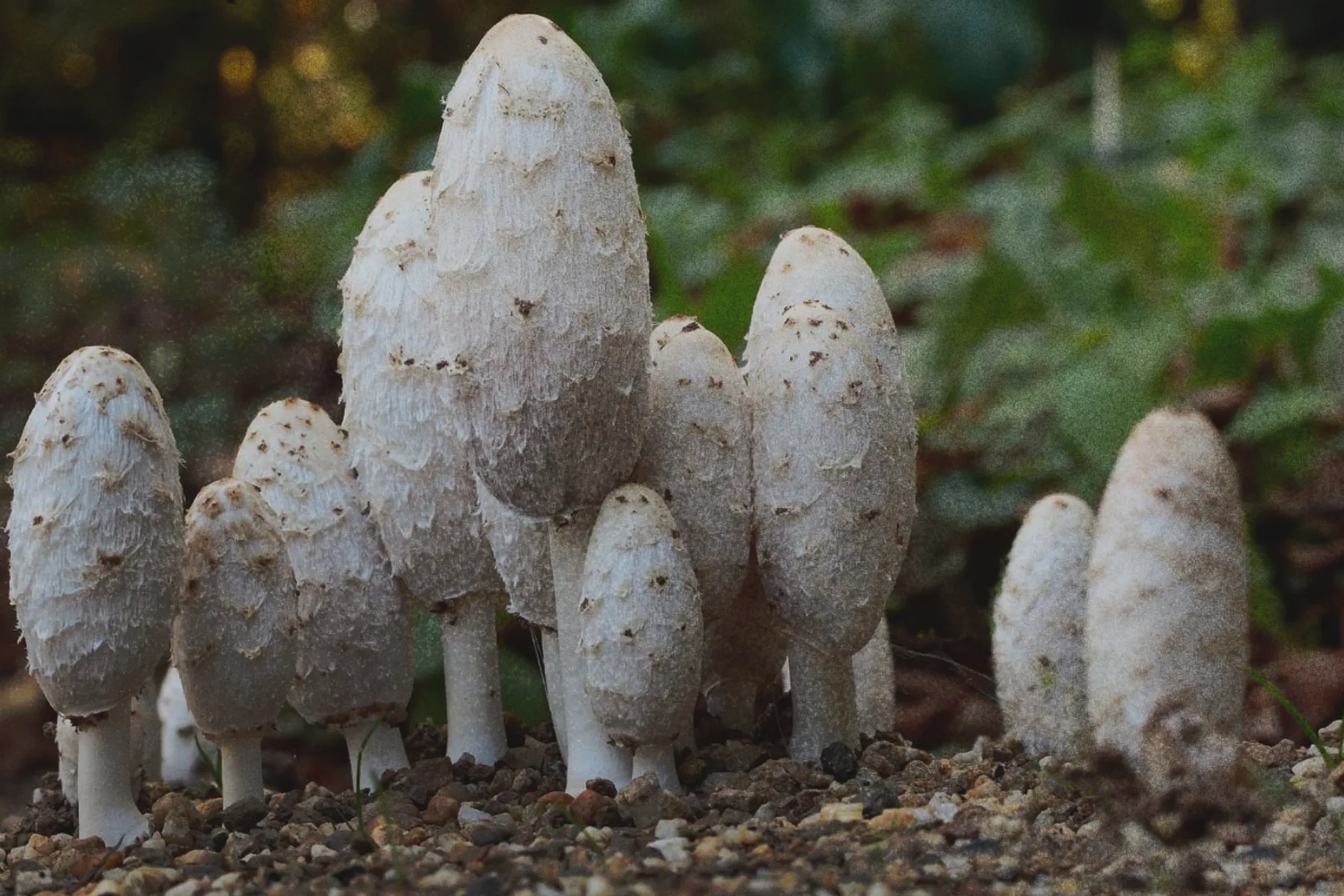
Coprinus comatus and Coprinus atramentarius — these are not the same species
Within the genus Coprinus (and the closely related Coprinopsis) two species exist that have historically often been confused, despite very different safety profiles:
Coprinus comatus (O.F. Müll.) Pers., in Polish czernidlak kołpakowaty, in China Bai Mo Gu 白蘑菇 ("white button mushroom"), Ji Tui Gu 雞腿菇 ("chicken-leg mushroom"). In English: shaggy mane, lawyer's wig, shaggy ink cap. An EDIBLE species, safe and tasty in its young growth phase. This is the species we work with at Aloha Fungi. Rich in comatin (a hypoglycaemic glycoprotein), CC-2 and CC-glucan polysaccharides, Y3 lectins, ergosterol, vanadium in exceptionally high concentration for a mushroom, and β-1,3/1,6-glucans.
Coprinopsis atramentaria (Bull.) Redhead, Vilgalys & Moncalvo (formerly Coprinus atramentarius), in Polish czernidlak pospolity. In English: common ink cap, tippler's bane. Externally similar to C. comatus, but contains COPRINE — a compound causing an Antabuse-type reaction (disulfiram-like) with alcohol: facial flushing, palpitations, nausea, sweating, hypotension. The reaction may occur even 72 hours after eating the mushroom. C. atramentarius is NOT an ingredient of Aloha Fungi extracts and should not be used in supplements.
At Aloha Fungi we work with Coprinus comatus, with every batch verified by DNA barcoding (ITS1/ITS2) to eliminate the risk of species confusion. In section K (precautions) the alcohol warning still appears, because in the event of raw-material contamination by another species (e.g. due to a cultivation or harvest error) the consequences for the consumer could be serious.
What's in the extract?
The extract from the fruiting body of Coprinus comatus contains several groups of bioactive compounds. Comatin — a glycoprotein with a molecular mass of about 25–30 kDa, described as hypoglycaemic in animal models of diabetes [Bailey 1984; Han et al. 2006, J Ethnopharmacol]. The mechanism is not fully described, probably through improvement in insulin sensitivity and partial regeneration of pancreatic β-cells. CC-2 and CC-glucan polysaccharides — β-1,3/1,6 glucans of 100–500 kDa, the main immunoactive compounds activating Dectin-1 and TLR4. Y3 lectins — sugar-binding proteins with antibacterial and antiviral activity in in vitro tests (including against Staphylococcus aureus and Bacillus subtilis strains) [Wang & Ng 2001]. Vanadium (V) in exceptionally high concentration for a mushroom (30–50 ppm vs < 5 ppm in other functional mushrooms) — an element with insulin-mimetic action in vitro described in the literature [Thompson & Orvig 2006]. Ergosterol and provitamin D₂. B vitamins (B₁, B₂, B₅, B₆). Essential amino acids (lysine, leucine, valine) and ergothioneine (a strong fungal antioxidant). β-1,3/1,6-glucan standardisation in our extract above 30%.
Coprinus comatus is one of the few functional mushrooms in which a significant concentration of vanadium has been described — an element rarely present in edible mushrooms. Vanadium has insulin-mimetic action described in the biomedical literature (insulin mimicry at the level of the insulin receptor, independent of blood glucose level). Together with comatin (a hypoglycaemic glycoprotein) and CC-2/CC-glucan polysaccharides, they form a three-pronged profile for the metabolic segment. That is why Coprinus is positioned in the Aloha Fungi portfolio as a niche species, for partners working with consumers with insulin resistance, prediabetes, or as auxiliary support in type 2 diabetes under the supervision of a diabetologist. At Aloha Fungi we use exclusively fruiting-body extract for this species.
Typical batch specification
Typical batch: β-glucans above 30% by Megazyme K-YBGL method (EUROFINS laboratory). Comatin (glycoprotein, 25–30 kDa) 1–3% by chromatographic fractionation with SEC-MALS verification and peptide analysis. CC-2 and CC-glucan polysaccharides 5–10% by column chromatography. Vanadium 30–50 ppm by ICP-MS (a key parameter differentiating Coprinus from other functional mushrooms). Total polysaccharides 30–40%. Extraction ratio 10:1. Moisture ≤ 5%. Microbiology compliant with the European Pharmacopoeia (Ph.Eur.).
CRITICAL: every batch is verified for species by DNA barcoding (ITS1/ITS2 with the GenBank/UNITE database) to distinguish Coprinus comatus from Coprinopsis atramentaria — this is an absolutely mandatory standard for this species in the portfolio (unlike for other species, where DNA barcoding is a premium option). Every batch comes with a full COA including test methodology.
Premium variant
★ Co-brandingFor brands that want to create their own functional-mushroom product and base it on our raw-material standard. You use extracts selected by Aloha Fungi, and once the criteria are met you can add our quality seal to your packaging.
MOQ: 5 kg
Our logo on your product →Raw material
Mature fruiting bodies of Coprinus comatus — key point: harvested in the YOUNG PHASE (cap not yet expanded, white to cream colour, before autolysis begins). Coprinus is a deliquescent mushroom (self-liquefying) — once it reaches full maturity, the cap transforms within a few hours into black slime (hence the name "ink cap"). Raw material for extraction must be harvested in the young phase and immediately dried at 40–50°C to stop the autolysis process. Cultivation controlled in certified conditions (Poland, China or European countries): substrate of wheat straw or a mixture of straw with hardwood sawdust, sterile climatic chambers, temperature 18–22°C, humidity 80–90%. Cultivation time from inoculation to harvest: 30–45 days (the shortest production cycle in the portfolio). Farms audited quarterly. CRITICAL: every harvest and every batch is verified by DNA barcoding to exclude C. atramentarius — in nature both species can grow close to each other and be confused in difficult harvest conditions. Wild harvest of C. comatus from Polish meadows is traditionally common (a common, unprotected mushroom), but for supplementation, controlled cultivation with a species certificate is required.
Extraction process
Drying of freshly harvested fruiting bodies at 40–50°C (critical — higher temperatures degrade comatin as a glycoprotein, lower ones do not stop autolysis). Milling. Main process: hot water extraction at 85–90°C (lower than for Shiitake lentinan, because comatin is more thermolabile), 3–5 hours, for optimal recovery of comatin, CC-2/CC-glucan polysaccharides, Y3 lectins and β-glucans. Possible low-temperature water-ethanol fraction for ergosterol. Combining fractions, concentration at reduced temperature, drying to powder form without maltodextrin with parameters protecting the glycoprotein structure of comatin.
Mechanisms described in the literature
Research on Coprinus comatus is a significantly smaller scientific base than for the other mushrooms in the portfolio (several dozen peer-reviewed publications, mostly animal models). There are no large human RCTs. Mechanisms are described in three directions.
- 01
Comatin and its effect on glucose metabolism
The best-described mechanism and at the same time the reason for Coprinus's presence in the B2B portfolio. Comatin (a glycoprotein of about 25–30 kDa) lowers fasting glycaemia, improves insulin sensitivity and partially regenerates pancreatic β-cells in streptozotocin-induced diabetes animal models [Bailey 1984; Han et al. 2006, J Ethnopharmacol; Ding et al. 2010, Carbohydr Polym]. The molecular mechanism is not fully described — most likely a combination of: a) direct comatin action on insulin receptors (insulin mimicry), b) the action of vanadium present in exceptionally high concentration, an element with insulin-mimetic activity described in the literature [Thompson & Orvig 2006], c) antioxidant protection of β-cells against oxidative apoptosis. The animal models are solid, but the lack of large human RCTs is a key evidence limitation. Small open clinical series (mainly Chinese) suggest an auxiliary effect in type 2 diabetes, but they require replication in randomised trials.
- 02
CC-2 and CC-glucan polysaccharides and innate immunity
The second mechanism. CC-2 and CC-glucan polysaccharides (β-1,3/1,6 glucans of 100–500 kDa) bind as agonists to the Dectin-1 receptor and, ancillarily, TLR4 on dendritic cells and macrophages [Brown & Gordon 2003]. A mechanism shared by all functional mushrooms containing β-glucans, but in Coprinus it partially overlaps with the effect of comatin and Y3 lectins. Y3 lectins show in vitro antibacterial activity against Staphylococcus aureus (including MRSA strains), Bacillus subtilis, Escherichia coli, and antiviral activity in selected models [Wang & Ng 2001]. There are no large clinical RCTs in humans yet — all observations require confirmation in randomised trials.
- 03
Prebiotic and support of the gut microbiota
The third mechanism, the least described in the literature but practically important. β-glucans from the Coprinus fruiting body ferment in the large intestine to short-chain fatty acids (SCFA: butyrate, acetate, propionate), which support intestinal epithelial health and stabilise the microbiota. In animal models, an increase in Bifidobacterium and Lactobacillus populations was observed after long-term supplementation with C. comatus extract. The prebiotic mechanism is auxiliary in the context of insulin resistance, because metabolic gut dysbiosis is one of the factors in the development of insulin resistance. All observations require confirmation in human RCTs.
Consumer communication — what's allowed, what to avoid
Health claims on finished products are regulated by EU rules (1924/2006 and 432/2012). Coprinus has no authorised EFSA claim, so any phrasing about the product's effect on the body requires particular caution in consumer communication. SPECIAL NOTE: Coprinus is a species with the WEAKEST scientific base in the portfolio (mainly animal models, no large human RCTs), and at the same time with the STRONGEST association with a specific disease entity (type 2 diabetes — ICD-10 E11). This asymmetry makes Coprinus a species that is particularly sensitive in regulatory terms. Every claim must be formulated with the highest care. TCM tradition (Bai Mo Gu as a tonic for the liver and spleen) and European folk medicine (Coprinus in 19th-century herbals as digestive support) allow communication about traditional use, provided strict language boundaries are observed. Below are the boundaries that are legally permitted.
What works
Communication directions safe for partners
Traditional use in Traditional Chinese Medicine and European folk medicine (Coprinus was traditionally used in the context of digestive support and tonifying the spleen-stomach functions in the TCM classification) — using the form "traditionally used in the context of X", not "supports X". Description of bioactive components (β-glucans above 30%, comatin as a glycoprotein, CC-2 and CC-glucan polysaccharides, vanadium in exceptionally high concentration). Description of the process (fruiting-body extract, hot water extraction 85–90°C, DNA barcoding of the species as standard — a credibility argument critical for Coprinus). Reporting research findings ("animal studies Bailey 1984, Han 2006 and Ding 2010 describe the effect of comatin on glucose metabolism in diabetes models…", not "Coprinus lowers sugar"). Referring to the unique marker profile (vanadium as an element rarely present in edible mushrooms). Positioning as an ingredient in "metabolic balance" or "blood sugar support" formulas — SAFE provided there are no references to specific disease entities.
What to avoid
Strictly prohibited communication
Attributing to the product the treatment, prevention or alleviation of specific disease entities (covered by the ICD-10 classification system, including type 1 and 2 diabetes — E10/E11, insulin resistance — R73.0, prediabetes, metabolic syndrome, oncological, autoimmune, bacterial-infection conditions). Forbidden words: "treats", "cures", "prevents", "therapy", "lowers blood sugar", "natural metformin", "replaces insulin", "treats diabetes", "natural diabetes therapy", "treats insulin resistance", "natural antibiotic" (Y3 lectins are in vitro, not in humans), "clinical efficacy", "normalises", "dosage" (we use "recommended daily portion"). Regardless of any study quote, research must not be cited in a way that suggests the product acts on a specific ailment.
Critical for Coprinus
Three specific regulatory risks:
1) Association with type 2 diabetes (ICD-10 E11). This is the GREATEST regulatory risk for Coprinus. Most marketing communication on the market writes "Coprinus for diabetes" or "natural metformin" — this is impermissible. Diabetes is a disease entity managed by a diabetologist; GIS (Polish Chief Sanitary Inspectorate) and UOKiK (Polish Office of Competition and Consumer Protection) actively prosecute such phrasing. Consumer communication MUST avoid these associations absolutely, despite the fact that the entire product positioning is based on the metabolic profile.
2) Association with insulin resistance (ICD-10 R73.0). Analogously to diabetes — insulin resistance is classified in ICD-10; the phrasing "Coprinus for insulin resistance" is a claim to an ailment.
3) Risk of species confusion with Coprinopsis atramentaria. Although we work exclusively with Coprinus comatus and every batch has DNA barcoding, in consumer communication it is absolutely necessary to warn against combination with alcohol — for consumer safety in the event of possible species mix-up in the supply chain or use of the extract in a context where the consumer might consume alcohol. The absence of such a warning would be negligence, even though our product is species-safe.
Extract applications
Coprinus is a NICHE species in the portfolio, so applications are narrower than for the main functional mushrooms. Capsules, standard fill 300–500 mg of extract (typical protocols 500–1500 mg/day, daily long-term supplementation). Powder, in "metabolic support" and "blood sugar balance" blends, in mixes with other metabolic mushrooms (classic combination with Maitake — SX-fraction and comatin act complementarily on different insulin pathways). Liquid extract (tincture), drops under the tongue for 30–60 seconds or into a drink before a meal. "Diabetic-friendly" chocolates and bars — in the EU caution is required with claims (communication section H). Functional "metabolic" beverages, pre-meal smoothies. NOTE: Coprinus is rarely used in culinary flavour products (slightly bitter, earthy taste, not very commercially attractive in cooking — the opposite of Shiitake). TECHNOLOGICAL NOTE: due to the risk (despite DNA barcoding of every batch) of species confusion in the supply chain, partners planning products with Coprinus SHOULD include a warning on the label against combination with alcohol (section K). This is a matter of industry responsibility, not only regulatory.
Stability, storage and packaging
Stability: 18–24 months in original packaging, at room temperature, away from direct light (SHORTER stability than for most mushrooms in the portfolio — a consequence of the thermolability of comatin as a glycoprotein). Inert packaging (nitrogen) on request, for Coprinus RECOMMENDED (not just optional). Comatin is thermally stable up to 60–65°C — above this it begins to degrade through denaturation. CC-2/CC-glucan polysaccharides are stable up to 90°C. Vanadium as a mineral element is stable regardless of conditions. Coprinus is MODERATELY HYGROSCOPIC; we recommend tight closure after use and storage below 50% relative humidity (a lower threshold than for other mushrooms). For liquid products (drops, syrups) — refrigerated storage after opening.
Precautions
Coprinus comatus generally has a good safety profile as an edible species, but due to the hypoglycaemic mechanism of comatin and the risk of species confusion with C. atramentarius, it requires specific warnings. The list is longer than for most mushrooms in the portfolio — a deliberate choice for consumer safety.
Critical warning #1: alcohol
Although we work EXCLUSIVELY with Coprinus comatus (every batch verified by DNA barcoding), and C. comatus does not contain coprine, we strongly recommend always placing on the final product label a warning against consuming alcohol during Coprinus supplementation and up to 72 hours after it ends. This is a safeguard in case of potential raw-material contamination in the supply chain, and because the close relative Coprinopsis atramentaria in combination with alcohol causes a strong Antabuse-type reaction (facial flushing, palpitations, nausea, sweating, hypotension). Consumer safety before regulatory correctness.
Critical warning #2: diabetes with pharmacological treatment
Patients with type 1 and 2 diabetes taking insulin, metformin, sulfonylureas, gliptins, GLP-1 agonists or other hypoglycaemic drugs MUST consult a diabetologist BEFORE starting supplementation with Coprinus. Comatin and vanadium may add up with hypoglycaemic drugs, glycaemia monitoring is mandatory, the drug dose may require adjustment under medical supervision. DO NOT start on your own.
Absolute contraindications: post-organ-transplant status with active immunosuppression (cyclosporine, tacrolimus, mycophenolate, everolimus) — β-glucans activate Dectin-1 and TLR4. Active autoimmune diseases in exacerbation (systemic lupus, severe RA, active ulcerative colitis). Children under 18 (no safety studies for concentrated extract in this group). Known allergy to fungi of the Agaricaceae family. Reactive or postprandial hypoglycaemia without diabetes — Coprinus may intensify episodes.
Requires consultation with a doctor: anticoagulants and antiplatelet drugs (warfarin, NOACs, clopidogrel, ASA) — INR monitoring. Autoimmune diseases in remission (stable Hashimoto, RA in remission) — mild immunomodulation, caution in people with labile disease. Kidney failure (eGFR below 60) — vanadium is partially excreted via the kidneys. Pregnancy and breastfeeding — no adequate RCTs, we recommend waiting until breastfeeding ends. Planned surgeries — discontinue 14 days before the procedure due to mild effect on platelet aggregation (β-glucans).
Possible adverse effects (rarely reported): hypoglycaemia with symptoms (dizziness, tremor, sweating) — especially in people taking hypoglycaemic drugs without dose adjustment. Gastrointestinal disorders in the first week (bloating, soft stool) — prebiotic effect of β-glucans. Isolated allergic reactions. In case of alcohol consumption — although theoretically our C. comatus should not cause an Antabuse reaction, any occurrence of symptoms (flushing, tachycardia, nausea) requires immediate discontinuation of the product and medical consultation. As standard, we include the key warnings on the final product's consumer label; for Coprinus we consider both warnings (alcohol + diabetes) absolutely mandatory on the label, regardless of the final form of the product.
Regulatory status
Coprinus comatus is traditionally present on the EU market as an edible forest mushroom (traditionally collected in Poland, Germany, France since the 19th century as a food mushroom) and as an ingredient in food supplements, and does not appear on the Novel Food list (regulation 2015/2283). Its pre-1997 status is based on historical culinary use in Europe and TCM tradition (Bai Mo Gu in classical Materia Medica).
SPECIAL NOTE: risk of species confusion + DNA barcoding requirement
Due to the risk of confusion with Coprinopsis atramentaria (a species containing coprine, not permitted in supplements), regulators with stricter oversight require detailed DNA barcoding documentation in the case of Coprinus. Some EU countries (Germany, the Netherlands) may require additional validation of raw-material composition during notification. In Poland the standard product notification to GIS is required under the food safety act, with an attached DNA barcoding certificate of the species. Currently Coprinus comatus does not have an official EFSA health claim in the EU.
We support partners with technical documentation, DNA barcoding certificates of the species, full raw-material specification for notification — but we don't replace professional legal counsel.
★ Fastest path
Ready-made Aloha Fungi products for your business
Choose ready-made products from the LONGEVITY or PRIME line, or individual SKUs, and sell them under the Aloha Fungi brand in your channel.
This solution is for shops, clinics, practices and online partners who want to add functional mushrooms to their offer quickly, without building a product from scratch.
MOQ
1 500 PLN
Lead time
24h
First delivery
24h
Selected literature
11 sources
Selected literature
11 sources- Bailey CJ et al. (1984). First described hypoglycaemic activity of Coprinus comatus in an animal model of diabetes. Planta Med.
- Han C et al. (2006). Hypoglycaemic mechanism of comatin in a streptozotocin-induced diabetes animal model. J Ethnopharmacol. PMID: 16797139.
- Ding Z et al. (2010). Coprinus comatus polysaccharides — isolation, characterisation, hypoglycaemic activity in vitro and in animal models. Carbohydr Polym.
- Yu J et al. (2009). Immunomodulatory activity of C. comatus polysaccharides on RAW264.7 macrophage and splenocyte lines. Int Immunopharmacol. PMID: 19527801.
- Wang H, Ng TB (2001). Y3, a novel lectin from Coprinus comatus with in vitro antibacterial and antiviral activity. Biochem Biophys Res Commun. PMID: 11237717.
- Thompson KH, Orvig C (2006). Vanadium in diabetes: 100 years from Phase 0 to Phase I (review of vanadium action). J Inorg Biochem. PMID: 17125837.
- Brown GD, Gordon S (2003). Mushroom β-glucans and mammalian immunity, Dectin-1. Nature. PMID: 12646903.
- Stilinović N et al. (2014). Hypoglycaemic effect of Coprinus comatus in type 2 diabetes patients — small open study. Note: small pilot study, requires replication in an RCT.
- Asatiani MD et al. (2010). Antioxidant and antibacterial activity of Coprinus comatus. Int J Med Mushrooms.
- Muszyńska B et al. (2018). Anti-inflammatory properties of edible mushrooms — a Polish review. Food Chem. PMID: 29146352. Department of Pharmaceutical Botany, Jagiellonian University Medical College.
- Liu YT et al. (2021). Coprinus comatus — chemistry, pharmacology and research directions (review). Molecules.