
Poria
Wolfiporia cocos (syn. Poria cocos)
Water-alcohol sclerotium extract with optional standardisation on β-glucans, pachymic acid and pachyman
Extract from the sclerotium of Wolfiporia cocos from certified controlled cultivation in the provinces of Fujian and Yunnan (China) — in symbiosis with the roots of Pinus massoniana or Pinus densiflora, as this species requires. Unlike most functional mushrooms, the raw material is the sclerotium (the underground part of the mycelium), not the fruiting body — a characteristic shared with Polyporus. Water-alcohol extraction matched to the species: water draws out pachyman (β-1,3 glucan), PCP polysaccharides and β-glucans; alcohol draws out lanostane triterpenoids (pachymic acid, tumulosic acid, eburicoic acid).
Many names, one species
Fu Ling (China, 茯苓 — literally "returning sands", referring to the symbolism of "returning vitality" and the return of health in classical TCM), Bukuryo (Japan, ブクリョウ), Bok-ryeong (Korea, 복령), Hoelen or Indian bread, Tuckahoe (English — from the resemblance of the sclerotium to a loaf of bread or a nut), pornatka kokosowa (Poland, the official botanical name, referring to the shape of the sclerotium resembling a coconut shell), pornatka (colloquial). All these names refer to the same species: Wolfiporia cocos (Schw.) Ryvarden & Gilb. — currently the binding taxonomic name. Earlier synonyms: Poria cocos (Schw.) Wolf (the most recognisable in medical literature and marketing), Pachyma hoelen (hence the English "hoelen"), Wolfiporia extensa. In the TCM tradition, Fu Ling is described in Shen Nong Ben Cao Jing (Divine Farmer's Classic of Materia Medica, 2nd century BC – 2nd century AD) in the highest category shang yao (上藥, "superior herbs") — a category of life-sustaining herbs suitable for long-term use without adverse effects. Today Fu Ling is one of the most frequently used herbs in all of Traditional Chinese Medicine — it is estimated to be present in more than 50% of classical formulas of the Chinese Materia Medica. This is a rarity: most functional mushrooms appear in 2–5 classical formulas; Fu Ling is foundational.
What's in the extract?
The extract from the sclerotium of Wolfiporia cocos contains two main groups of bioactive compounds, each drawn by a different solvent. The group of lanostane triterpenoids: pachymic acid (main marker, characteristic of the species) 0.1–0.5%, tumulosic acid, eburicoic acid, dehydroeburicoic acid, polyporenic acid C, dehydrotrametenolic acid. Together they constitute 1–3% of the extract's dry mass. All lanostane triterpenoids have anti-inflammatory activity described in the literature (NF-κB inhibition) and are lipophilic, which is why they require ethanol extraction. The polysaccharide group: pachyman (main component, β-1,3-glucan of about 200–300 kDa), pachymaran (chemically modified pachyman, greater immunological activity in vitro), PCP (Poria cocos polysaccharide), PCP-1C (a homogeneous fraction containing galactose, glucose, mannose and fucose in a ratio of 43.5:24.4:17.4:14.6) [Jiang et al. 2022, Front Nutr]. β-1,3/1,6-glucan standardisation in our extract above 30%. Additionally: ergosterol and provitamin D₂, choline and lecithin (associated with the classical "calming the Shen" activity in TCM), histidine, glutamic acid, aspartic acid.
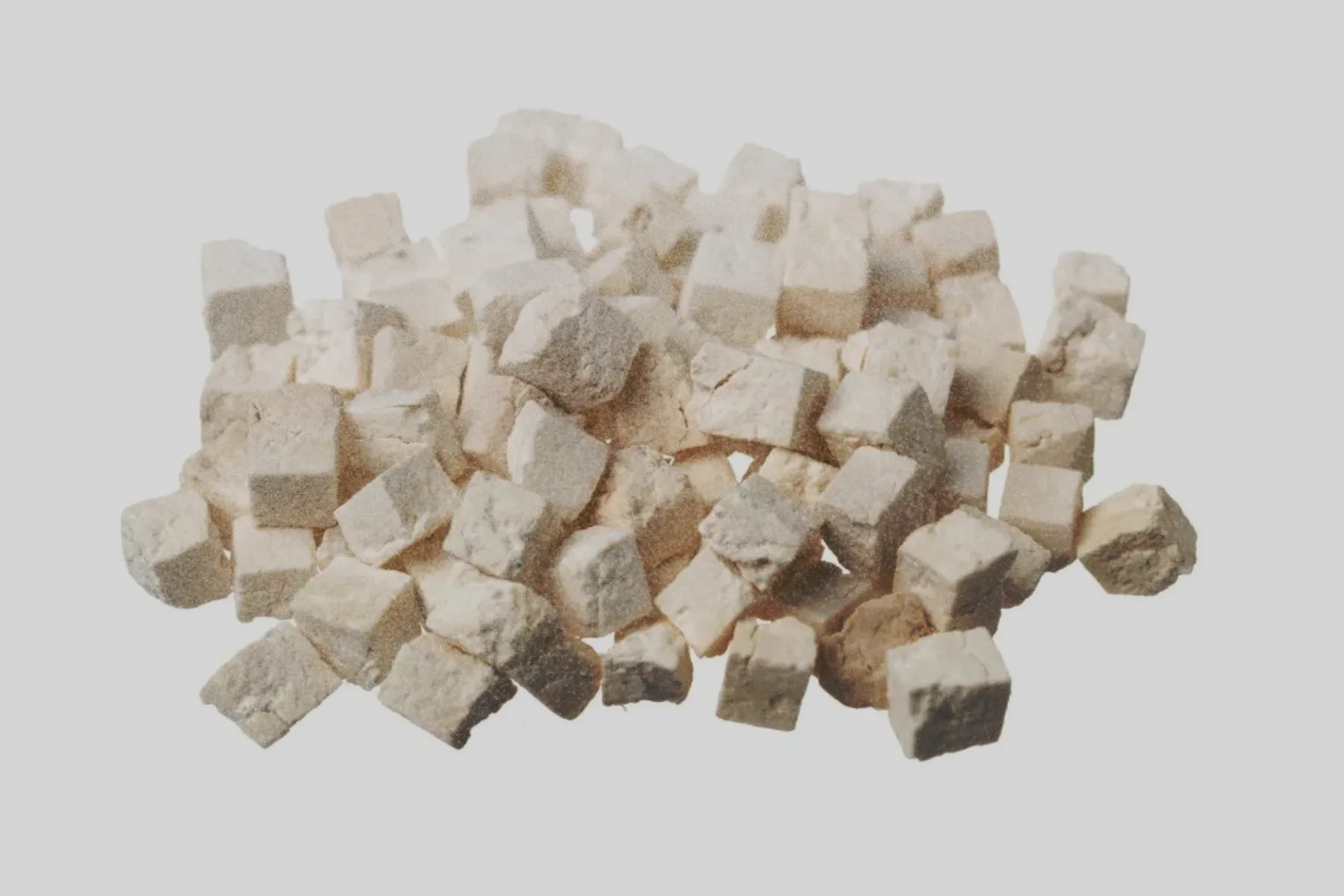
Poria, like Polyporus, has a sclerotium (the underground part of the mycelium) as its raw material, not the fruiting body. It grows in obligatory symbiosis with the roots of pines — Pinus massoniana in southern China, P. densiflora in Korea and Japan, P. taeda in experimental American cultivation. Without this root symbiosis the sclerotium does not form in the appropriate chemical profile. The sclerotium matures 2–3 years after inoculation of the pine with spores, reaching a mass of 1–5 kg per single structure (hence the English name "Indian bread"). In classical TCM, Fu Ling is pharmaceutically distinguished into three parts: Fu Ling Pi (skin, more diuretic), Bai Fu Ling (white flesh, classic Spleen tonic) and Chi Fu Ling (reddish inner flesh, clearing Heat from the urinary tract) — in complete extracts we combine all three fractions. At Aloha Fungi we use exclusively sclerotium extract for this species.
Typical batch specification
Typical batch: β-glucans above 30% by Megazyme K-YBGL method (EUROFINS laboratory). Pachymic acid (lanostane triterpenoid, marker of species authenticity) 0.1–0.5% by HPLC with certified reference standard. Total triterpenoids 1–3% by HPLC. Pachyman (β-1,3-glucan) 10–20% by chromatographic fractionation. Total polysaccharides 30–45%. Extraction ratio 10:1. Moisture ≤ 5%. Microbiology compliant with the European Pharmacopoeia (Ph.Eur.). Every batch comes with a full COA including test methodology. For partners requiring highest precision, we offer DNA barcoding species verification ITS1/ITS2 with the GenBank/UNITE database (to distinguish Wolfiporia cocos from close relatives within the genus Wolfiporia and related ones) and PCP-1C monosaccharide profile analysis (galactose:glucose:mannose:fucose).
Premium variant
★ Co-brandingFor brands that want to create their own functional-mushroom product and base it on our raw-material standard. You use extracts selected by Aloha Fungi, and once the criteria are met you can add our quality seal to your packaging.
MOQ: 5 kg
Our logo on your product →Raw material
Mature sclerotia of Wolfiporia cocos from certified controlled cultivation in the provinces of Fujian and Yunnan (southern China) — regions where Pinus massoniana, the host species, naturally grows. Poria is a root parasite of pine, so cultivation requires inoculating spores into the trunks and roots of living pines (a "ground" type cultivation) or cutting trees from inoculated pine wood ("trunk" cultivation). Sclerotium maturation time: 2–3 years after inoculation. Farms audited quarterly, including microbiological tests of the substrate and species confirmation by DNA barcoding. Harvest at the maturity phase (sclerotium of 1–5 kg, compact structure, external colour brown-black with skin, white-pink interior). Sclerotia are sliced into pieces immediately after harvest, dried at 40–50°C and packed airtight. Wild raw material from Polish forests does not exist (Poria does not grow naturally in the Polish climate; TCM tradition and the European industry operate exclusively on East Asian raw material).
Extraction process
Milling of dried sclerotia to a granulation optimal for dual extraction (300–500 μm). Dual extraction: hot water extraction at 90–95°C, time 4–6 hours (pachyman as β-1,3-glucan and PCP polysaccharides require high temperature) and ethanol extraction at lower temperature 50–60°C (lanostane triterpenoids — pachymic acid, tumulosic acid, eburicoic acid — are lipophilic and are better drawn in 60–70% ethanol). Combining fractions in a precise ratio depending on product grade, concentration at reduced temperature (rotary evaporator max. 50°C), drying to powder form without maltodextrin with parameters protecting the pachyman structure.
Wolfiporia cocos — sclerotium from our controlled cultivation
Mechanisms described in the literature
Wolfiporia cocos belongs to the well-researched functional mushrooms (several hundred peer-reviewed publications, including in vitro, animal models, several small human RCTs). Most contemporary research focuses on three mechanistic directions, each consistent with classical TCM actions (drains Dampness, strengthens Spleen, calms Shen).
- 01
Pachyman, β-glucans and immunomodulation
The best-described mechanism. Pachyman (a β-1,3-glucan of 200–300 kDa) and derivative polysaccharides (PCP, PCP-1C, pachymaran) bind as agonists to the Dectin-1 and TLR4 receptors on dendritic cells, macrophages and monocytes [Brown & Gordon 2003]. A mechanism shared by all functional mushrooms containing β-glucans. Pachymaran (chemically modified pachyman with carboxylated groups) shows in in vitro tests stronger immunomodulatory activity than native pachyman, probably through better solubility and bioavailability. PCP-1C (a homogeneous fraction containing galactose, glucose, mannose and fucose) in an animal model of alcoholic liver disease (Jiang et al. 2022, Front Nutr) inhibited CYP2E1 expression and the NF-κB pathway, reducing oxidative stress and intestinal permeability — a hepatoprotective effect. Large human RCTs confirming clinical translation are not yet available.
- 02
Pachymic acid and anti-inflammatory mechanism
The second-most-important mechanism. Pachymic acid (the main lanostane triterpenoid of Poria) inhibits the NF-κB pathway in macrophage cells activated with lipopolysaccharide (LPS) [Cheng et al. 2013, Int J Oncol]. The mechanism translates into a reduction in pro-inflammatory cytokine production (TNF-α, IL-1β, IL-6) and mediators (iNOS, COX-2). W. cocos triterpenoids in pancreatic cancer model studies reduced MMP-7 expression (matrix metalloproteinase), a marker of tumour cell invasiveness [Cheng 2013]. Other lanostane triterpenoids (eburicoic acid, tumulosic acid, polyporenic acid C) show in in vitro tests anti-inflammatory and cytotoxic activity against selected cell lines. All observations require confirmation in human RCTs.
- 03
Diuresis, drainage and classical TCM action
The third mechanism, the least well-described at the molecular level but clinically observed for over 2000 years. Poria in classical TCM "drains Dampness" through a mild diuretic action — similar to Polyporus, but weaker and more physiological. The mechanism probably involves modulation of the renin-angiotensin-aldosterone (RAA) system and an effect on aquaporin expression in the renal medulla, but direct mechanistic studies are less numerous than for Polyporus. Additionally, Poria is a classic "Shen calmer" in TCM — an anxiolytic and sedative action. Today it is explained as modulation of GABA and 5-HT receptors, although the molecular mechanism remains under research. Recent studies (Liu et al. 2023, PMC9920314) also investigate Poria as an inhibitor of acetylcholinesterase (AChE) in the context of dementia / Alzheimer's disease — preliminary results from in vitro tests and molecular docking suggest that pachymic acid and triterpenoids may show anti-AChE activity, but this is early science; large human RCTs in dementia are not yet available.
★ Pornatka in the Aloha Fungi brand
This is how Pornatka looks as a finished product
Aloha Fungi is not only a B2B raw material — it's also our consumer brand. Here's how we use the same Pornatka extract in our own products LONGEVITY and PRIME on alohafungi.pl. You can distribute these products or draw inspiration from their form and communication for your own brand.

Consumer communication — what's allowed, what to avoid
Health claims on finished products are regulated by EU rules (1924/2006 and 432/2012). Poria has no authorised EFSA claim, so any phrasing about the product's effect on the body requires particular caution in consumer communication. Poria is the species with the weakest associations with specific disease entities in the portfolio (apart from Tremella and Shiitake) — a classic broad-spectrum tonic, without "strong" specialisation like Coprinus (diabetes) or Polyporus (lymphedema). This makes Poria a relatively regulatory-safe species, but the classical TCM actions ("calms the Shen", "drains Dampness", "strengthens the Spleen") cannot be directly translated into functional claims like "acts anxiolytically" or "lowers blood pressure". The TCM tradition (Fu Ling in Shen Nong Ben Cao Jing, over 2000 years of documented use, a foundational ingredient of more than half of the classical formulas) and the mechanisms described in peer-reviewed literature allow communication about the traditional use of Poria, provided certain language boundaries are maintained. Below are the boundaries that are legally permitted.
What works
Communication directions safe for partners
Traditional use in Traditional Chinese Medicine (Poria was traditionally used in the context of digestive support, tonifying spleen-stomach functions, mild drainage of water from the body and calming during periods of mental overload — from Shen Nong Ben Cao Jing, 2nd century BC) — using the form "traditionally used in the context of X", not "supports X". Description of bioactive compounds (β-glucans above 30%, pachymic acid as a lanostane triterpenoid, pachyman, PCP). Description of the process (sclerotium extract, cultivation in symbiosis with pine, water-alcohol extraction, triterpenoid fraction). Reporting research findings ("the Jiang 2022 study describes the effect of PCP-1C on the NF-κB pathway in an animal model…", not "Poria acts hepatoprotectively"). Referring to Fu Ling's position as a foundational TCM ingredient (more than 50% of classical formulas) — a VERY strong traditional credibility argument for Poria. Positioning as an ingredient in "digestive support", "calm & focus" or "daily tonic" formulas — SAFE provided there are no references to specific disease entities.
What to avoid
Strictly prohibited communication
Attributing to the product the treatment, prevention or alleviation of specific disease entities (covered by the ICD-10 classification system, including anxiety disorders F41, depression F32–F33, insomnia G47.0, dementia F03/G30 (Alzheimer's), liver disorders (ALD K70, cirrhosis K74), oncological conditions, gut dysbiosis, oedema, heart failure). Forbidden words: "treats", "cures", "prevents", "therapy", "natural anxiolytic", "natural sedative", "plant-based sleep medication", "natural dementia treatment", "ALD hepatoprotector", "natural pancreatic cancer treatment", "natural pharmacological diuretic", "natural oedema treatment", "clinical efficacy", "normalises", "dosage" (we use "recommended daily portion"). Regardless of any study quote, research must not be cited in a way that suggests the product acts on a specific ailment.
Critical for Poria
Three specific regulatory directions requiring caution:
1) Association with sedatives/anxiolytics. The classical TCM "calming the Shen" action is fundamental for Poria, but its direct translation into claims like "acts anxiolytically", "natural anxiolytic", "helps with anxiety" is a functional claim to ICD-10 F41 (anxiety disorders). Communication of the type "classically used in the context of support during periods of mental overload" is SAFE, but further specification requires caution.
2) Association with hepatoprotection in ALD (alcoholic liver disease). The Jiang 2022 study is mechanistically strong, but concerns an animal model — citing it in supplement marketing as "Poria protects the liver from alcohol" can be interpreted as a claim to ICD-10 K70 (alcoholic liver disease) AND as a suggestion that the product can be an "antidote" for excessive alcohol consumption — this is classification as a medicine + risk of irresponsible public-health communication.
3) Association with dementia / Alzheimer's (anti-AChE). Recent studies on pachymic acid as an acetylcholinesterase inhibitor in the context of Alzheimer's disease are scientifically exciting, but concern an early research phase (in vitro, molecular docking). Citing this in supplement marketing as "Poria helps the memory of older adults" is a functional claim to ICD-10 F03/G30 — UOKiK actively prosecutes such phrasing in the senior supplement industry.
Extract applications
The Poria extract works technologically across the widest range of formats in the portfolio — a consequence of the classical position of Fu Ling as a foundational ingredient of compound formulas. Capsules, standard fill 300–500 mg of extract (typical protocols 500–2000 mg/day, daily long-term supplementation as shang yao). Powder, in mixes with other mushrooms (most often with Polyporus for drainage or Reishi for evening calm), in classical TCM formulas (Si Jun Zi Tang with ginseng, Wu Ling San with Polyporus, Liu Wei Di Huang Wan with Rehmannia), in infusions. Poria has a slightly sweet, bland, neutral flavour, easy to compose — a UNIQUE feature of this mushroom (similar to Tremella, the most flavour-mild mushrooms in the portfolio). Liquid extract (tincture), drops under the tongue for 30–60 seconds or into a drink. Chocolates and bars, flavour tolerance up to 3% by weight (better than for Coriolus, worse than for Tremella). Coffee and cacao, good flavour synergy (neutrality does not clash with bitter flavours), a natural ingredient of "mushroom coffee" formulas. Functional "daily tonic", "digestive support", "calm & balance" beverages — Poria is IDEAL for positioning a "delicate daily tonic" without therapeutic specification. "Gut health" and "microbiome support" supplements — Poria is a popular ingredient in combinations with prebiotics (FOS, inulin), but NOTE: "microbiome support" claims require EFSA authorisation (section H).
Stability, storage and packaging
Stability: 24–36 months in original packaging, at room temperature, away from direct light. Inert packaging (nitrogen) on request. Pachyman as a β-1,3-glucan is thermally stable up to 90°C. Pachymic acid and other lanostane triterpenoids are sensitive to oxidation — the extract should be packed hermetically, without exposure to oxygen and UV light (dark glass or aluminium container). Poria is moderately hygroscopic; we recommend tight closure after use and storage below 60% relative humidity, especially in the production of loose powders. An extract with high triterpenoid content may have a characteristic yellow-beige colour; intensive darkening during storage may indicate oxidation — a batch defect if the extract clearly darkens in the first months.
Precautions
Poria has ONE OF THE BEST safety profiles among functional mushrooms. In classical TCM it is classified as shang yao (a superior herb, long-term, without adverse effects with regular use) and is present in more than 50% of classical formulas of the Chinese Materia Medica — this is an empirical base of safety of over 2000 years. In animal models and small clinical series, no serious adverse effects have been reported. Nevertheless, there are groups that require specific caution.
Absolute contraindications: known allergy to fungi of the Polyporaceae family or cross hypersensitivity to other polypore mushrooms. Post-organ-transplant status with active immunosuppression (cyclosporine, tacrolimus, mycophenolate, everolimus, sirolimus) — β-glucans activate Dectin-1 and TLR4. Children under 18 for concentrated extract (Poria in classical TCM formulas is given to children in controlled amounts under the supervision of a TCM therapist, but this is a different situation from a concentrated extract in supplements).
Requires consultation with a doctor: diuretics and hypotensive drugs (furosemide, thiazides, ACE inhibitors, sartans, beta-blockers, potassium-sparing diuretics) — Poria has mild diuretic action, which may add up to pharmacological diuretics, leading to excessive diuresis or electrolyte disturbances (rarely, mainly with long-term combination in high doses). Blood pressure and ionogram monitoring recommended for people on hypotensive drugs. Sedatives, anxiolytics and sleeping drugs (benzodiazepines, "Z-drugs" like zolpidem and zaleplon, antidepressants SSRI, SNRI, mirtazapine) — Poria classically "calms the Shen" and may potentially add up with sedative drugs. Consultation with a psychiatrist or neurologist before combining. Anticoagulants and antiplatelet drugs (warfarin, NOACs, clopidogrel, ASA in cardiological doses) — β-glucans may mildly affect platelet aggregation. INR monitoring on warfarin. Anti-diabetic drugs — Poria has a documented effect on glucose and lipid metabolism [Guo et al. 2026, Front Nutr review], glycaemia monitoring recommended. Autoimmune diseases in remission — Poria's mild immunomodulation should not worsen the state in remission, but caution in people with labile disease. Pregnancy and breastfeeding — Poria in classical TCM is one of the few mushrooms accepted in pregnancy under the supervision of a TCM therapist (the classical formula Dang Gui Shao Yao San contains Fu Ling as an ingredient for certain pregnancy indications), but for concentrated extract no adequate RCTs exist — we recommend consultation with the supervising physician. Planned surgeries — discontinue 14 days before the procedure.
Possible adverse effects (very rarely reported): mild bloating in the first week (prebiotic effect of β-glucans) — usually resolving on their own in 5–7 days; the portion can be split into 2 doses. Mild drowsiness in sensitive people after an evening dose (the classical "calming Shen" action). Isolated allergic reactions (itching, rash) in people hypersensitive to mushrooms. As standard, we include the key warnings on the final product's consumer label, and we provide brands with specific wording compliant with EU food law.
Regulatory status
Wolfiporia cocos (syn. Poria cocos) is traditionally present on the EU market as an ingredient in food supplements (documented use in TCM since the 2nd century BC, presence in more than 50% of classical formulas of the Chinese Materia Medica, in European phytotherapy since the 1980s mainly through import from China) and does not appear on the Novel Food list (regulation 2015/2283). Its pre-1997 status is based on historical culinary-phytotherapeutic use in East Asia and European trade — Poria is also used culinarily (in Chinese desserts and Asian home cooking, as an ingredient in the classical Chinese "four-ingredient soup" Si Wu Tang in its culinary version). Poria is NOT under species protection in any EU country (an East Asian species, it does not grow naturally in the European climate).
NOTE: difference in status between markets
In the Chinese Pharmacopoeia (2020), Fu Ling is registered as an official herbal MEDICINE with indications including oedema, digestive disorders, restless mind and sleep disorders — in the EU, however, Fu Ling does not have medicine status; it is AN INGREDIENT IN FOOD SUPPLEMENTS. This difference in status between markets must be maintained in consumer communication.
Product notification to GIS is required under the food safety act. We support partners with technical documentation, certificates of origin and raw-material specification for notification — but we don't replace professional legal counsel.
★ Fastest path
Ready-made Aloha Fungi products for your business
Choose ready-made products from the LONGEVITY or PRIME line, or individual SKUs, and sell them under the Aloha Fungi brand in your channel.
This solution is for shops, clinics, practices and online partners who want to add functional mushrooms to their offer quickly, without building a product from scratch.
MOQ
1 500 PLN
Lead time
24h
First delivery
24h
Selected literature
11 sources
Selected literature
11 sources- Guo Y, Liu T, Li D (2026). Progress of research on pharmacological effects of Poria cocos — narrative update 2023–2025. Front Nutr 13:1774161. PMC12894036.
- Jiang YH et al. (2022). Poria cocos polysaccharide prevents alcohol-induced liver injury by inhibiting oxidative stress and intestinal permeability. Front Nutr 9:963598. PMC9428680.
- Cheng S, Eliaz I, Lin J, Sliva D (2013). Triterpenoids from Poria cocos suppress growth and invasiveness of pancreatic cancer cells through the down-regulation of MMP-7. Int J Oncol. PMC3699575.
- Liu et al. (2023). Effective combination of complex chromatography, molecular docking and enzyme kinetics in the identification of acetylcholinesterase inhibitors from Poria cocos. Molecules. PMC9920314.
- Ríos JL (2011). Chemistry and pharmacological properties of Poria cocos. Planta Med. PMID: 21347997.
- Sun Y (2014). Biological activities and potential health benefits of polysaccharides from Poria cocos and their derivatives. Int J Biol Macromol. PMID: 24631558.
- Wang YZ et al. (2013). Raw material, extraction, structure and biological activity of polysaccharides from Poria cocos. Carbohydr Polym 95(1):507-515.
- Esteban CI (2009). Poria cocos. Rev Iberoam Micol 26(2):103-107. PMID: 19631161.
- Lai Y et al. (2016). Beta-D-glucan from Wolfiporia cocos and its derivative protect against high-fat diet-induced obesity in mice. Br J Nutr.
- Brown GD, Gordon S (2003). Mushroom β-glucans and mammalian immunity, Dectin-1. Nature. PMID: 12646903.
- Muszyńska B et al. (2018). Anti-inflammatory properties of edible mushrooms — a review. Food Chem. PMID: 29146352. Department of Pharmaceutical Botany, Jagiellonian University Medical College.