
Auricularia
Auricularia auricula-judae
Extract from the fruiting body of Auricularia auricula-judae, hot water and alkaline extraction, standardised above 30% polysaccharides, with an AAP fraction declaration
Extract from the fruiting body of Auricularia auricula-judae (wood ear) from certified organic cultivation in China (Heilongjiang, Jilin) or in European controlled cultivations on hardwood sawdust. Unlike most functional mushrooms in the portfolio, Auricularia is widely present in European Asian cuisine (Peking soup, hot and sour soup, hot pot), which means good consumer recognisability and low perception barriers. Hot water extraction as the main process (β-glucans, AAP polysaccharides) plus optional alkaline extraction (glucuronic acids responsible for anticoagulant activity require extraction in an alkaline environment).
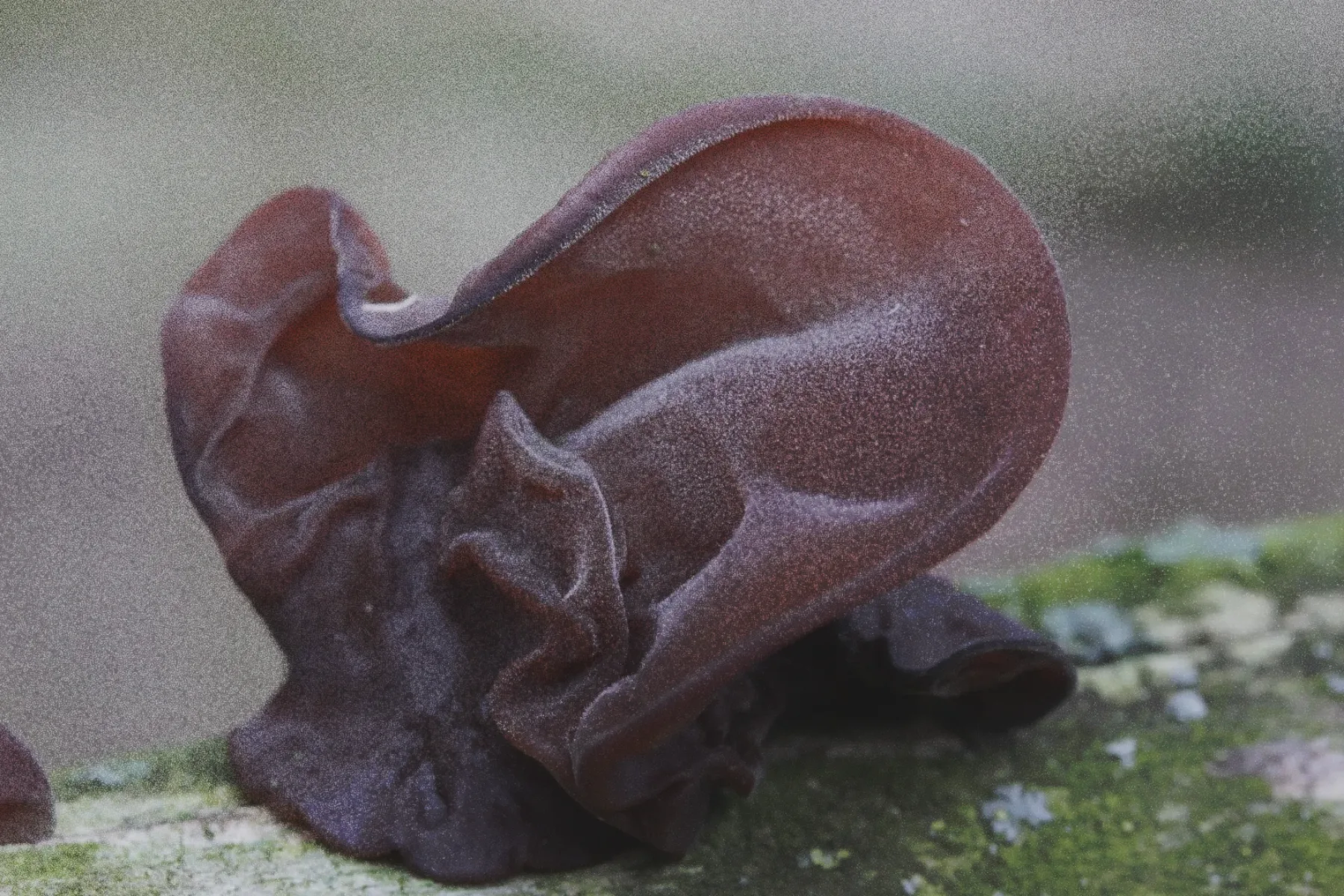
Many names, one species
Mu Er (China, 木耳 — "tree ear", from the shape of the fruiting body resembling an ear growing on a tree trunk), Hei Mu Er (China, 黑木耳 — "black tree ear"), kikurage (Japan, 木耳 — phonetic reading of the Chinese characters), mok-i (Korea), Jew's ear, Wood ear, Jelly ear, Cloud ear, Black fungus, Wood fungus (English — "Judas's ear", from the medieval legend that Judas Iscariot hanged himself on an elder tree Sambucus nigra, on which this fungus most often grows), uszak bzowy (Poland, the official botanical name from the black elder, the main host), uszak gęstowłosy, ucho Judasza, judaszowe ucho (regionally). All these names refer to the same species complex: Auricularia auricula-judae (Bull.) Quél. — the historical European name, now used globally in phytotherapy. TAXONOMIC NOTE: in 2014, Auricularia heimuer was scientifically distinguished as a separate East Asian species (commercially cultivated in China), morphologically indistinguishable from European A. auricula-judae — in market practice both species are sold under the name "Auricularia auricula-judae" or "Auricularia". Auricularia is one of the few functional mushrooms with a documented European medical tradition: the English herbalist John Gerard in The Herball (1597) recommended a decoction of wood ear in milk or beer for sore throats and tonsil swelling. In the TCM tradition, Mu Er is a classic tonic of Blood (Xue) and Yin, described in Shen Nong Ben Cao Jing (2nd century BC – 2nd century AD).
What's in the extract?
The extract from the fruiting body of Auricularia auricula-judae contains a bioactive profile unique in the portfolio, dominated by polysaccharides with haemodynamic activity. AAP (Auricularia auricula polysaccharide) — the main bioactive complex, an acidic polysaccharide with a molecular mass of about 160 kDa, structurally a glucuronoxylomannan containing mannose, glucose, glucuronic acid and xylose (WITHOUT sulphates, unlike mammalian heparin) [Yoon et al. 2003, Thromb Res]. Glucuronic acids are ESSENTIAL for the anticoagulant activity of AAP — after reduction of the carboxyl groups, the activity disappears. The specific anticoagulant activity of purified AAP: 2 IU/mg (comparable to marine sulphated polysaccharides, but through a different mechanism — antithrombin, not heparin cofactor II). Derivative fractions: aAAP-1 (purified by DEAE Sepharose chromatography), AAP I-a (Zhang 2011), AAP-I (Wu 2010). β-1,3/1,6-glucans as an immunomodulatory fraction activating Dectin-1 and TLR4 receptors [Brown & Gordon 2003]. Glucuronoxylogalactoglucomannan — a structurally unprecedented polysaccharide described in taxonomic works on Auricularia. Melanin — a black fungal pigment (analogous to Chaga, but in smaller concentrations), a strong antioxidant in vitro. Ergosterol and provitamin D₂. Cephalin, sphingomyelin (membrane lipids with antiaggregation activity historically described). Essential amino acids, trace elements (iron, calcium, phosphorus). Standardisation of total polysaccharides in our extract above 30%.
Auricularia is the only functional mushroom in the Aloha Fungi portfolio with a documented anticoagulant mechanism based on the activation of antithrombin — a protein controlling blood coagulation in mammals. This makes Auricularia the species most haemodynamic in the group: strongly affecting the coagulation profile and lipid profile, but at the same time REQUIRING the greatest caution when combined with anticoagulants and antiplatelet drugs. The mechanism is unique — it does not rely on sulphate groups like in mammalian heparin (Auricularia does not contain them), but on glucuronic acids in the polysaccharide chain. That is why consumer communication for Auricularia must be more restrictive than for the other mushrooms in the portfolio (section H). At Aloha Fungi we use exclusively fruiting-body extract for this species.
Typical batch specification
Typical batch: total polysaccharides above 30% by Megazyme method + HPLC-RID monosaccharide analysis. AAP (acidic polysaccharide, ca. 160 kDa) 5–10% by chromatographic fractionation with SEC-MALS verification. β-1,3/1,6-glucans 15–25% by Megazyme K-YBGL method (EUROFINS laboratory). Monosaccharide ratio (mannose : glucose : glucuronic acid : xylose) compliant with the COA profile as a marker of species authenticity. Uronic acid content (a key parameter for anticoagulant activity) 5–12% by the m-hydroxydiphenyl method. Moisture ≤ 5%. Extraction ratio 10:1. Microbiology compliant with the European Pharmacopoeia (Ph.Eur.). Every batch comes with a full COA including test methodology. For partners requiring the highest precision, we offer species verification by DNA barcoding ITS1/ITS2 with the GenBank/UNITE database (distinguishing A. auricula-judae from A. heimuer, A. polytricha, A. cornea and other members of the genus).
Premium variant
★ Co-brandingFor brands that want to create their own functional-mushroom product and base it on our raw-material standard. You use extracts selected by Aloha Fungi, and once the criteria are met you can add our quality seal to your packaging.
MOQ: 5 kg
Our logo on your product →Raw material
Mature fruiting bodies of Auricularia auricula-judae from two parallel sources, depending on the batch. Main source: certified controlled cultivation in non-industrial regions of China (Heilongjiang, Jilin — northeastern China, the classical Mu Er cultivation zone, with a documented production tradition of over 1400 years). Alternative source: European controlled cultivation on hardwood sawdust (oak, beech, black elder). Cultivation on sawdust with bran in sterile climatic chambers, at 20–25°C and 85–95% humidity (Auricularia requires high humidity to fruit, tropical-subtropical climate). Cultivation time from inoculation to harvest: 90–120 days. Farms audited quarterly, with microbiological tests of the substrate. Harvest at full maturity (fruiting body 3–8 cm wide, brown to black colour, characteristic gelatinous consistency when fresh, hard after drying). NOTE: Auricularia auricula-judae also grows wild in Polish forests (mainly on black elder Sambucus nigra, less often on alders, maples, oaks) — it is an unprotected species, frost-resistant, growing wild almost all year round. Polish wild harvest is traditionally present in regional cooking (especially Podlasie, Pomerania), but for supplementation, which requires standardisation, we need raw material from controlled cultivation.
Extraction process
Milling of dried fruiting bodies to a granulation optimal for extraction (300–500 μm). Main process: hot water extraction at 90°C, time 4–6 hours, for recovery of β-glucans, total polysaccharides and part of AAP (the neutral fraction). Second process: extraction in an alkaline environment (1% NaOH, temperature 60–70°C, time 2–3 hours) — KEY for recovery of acidic AAP fractions with anticoagulant activity. The alkaline fraction is then neutralised (usually with citric acid), dialysed and precipitated with ethanol for purification. Combining fractions in a precise ratio depending on product grade (the alkaline fraction contains a higher concentration of AAP, the water fraction — of neutral β-glucans), concentration at reduced temperature, drying to powder form without maltodextrin. For advanced premium batches, we offer additional chromatographic purification (DEAE Sepharose, Sephadex) for the aAAP-1 fraction — requires individual negotiation, significantly higher price, longer lead time.
Mechanisms described in the literature
Research on Auricularia auricula-judae (several hundred peer-reviewed publications, mainly Chinese and Korean, in vitro and animal models; few human RCTs) focuses on three mechanistic directions. The first of them — anticoagulant activity — is the best-described mechanism at the molecular level in the entire Aloha Fungi portfolio, and it is what makes Auricularia the species requiring the greatest regulatory caution.
- 01
AAP and anticoagulant activity through antithrombin
The best-described mechanism in the entire Aloha Fungi portfolio (a level of molecular detail comparable with Shiitake lentinan and Coriolus PSK). AAP (Auricularia auricula polysaccharide), an acidic polysaccharide with a glucuronoxylomannan structure and a mass of about 160 kDa, acts as an allosteric catalyst of antithrombin III (AT-III) — a plasma protein that naturally inhibits thrombin (Factor IIa) and other proteases of the coagulation cascade [Yoon et al. 2003, Thromb Res 112(3):151–158]. NOTE: the mechanism is SELECTIVE — AAP catalyses the inhibition of thrombin by AT-III, but does NOT catalyse the inhibition of Factor Xa by AT-III, nor does it act through heparin cofactor II. This significantly distinguishes AAP from mammalian heparin (which acts in two ways: antithrombin + Xa). Specific anticoagulant activity of purified AAP: 2 IU/mg. Essentiality of glucuronic acids: after reduction of the carboxyl groups, the anticoagulant activity completely disappears [Yoon 2003]. In 2020, Wang and Su [Molecules 25(3):710, PMC7036816] confirmed the synergistic anticoagulant activity of aAAP-1 through the endogenous and exogenous coagulation pathways. A later study by Liu et al. [2022, PMC9369961] in a model of carrageenan-induced thrombosis in mice confirmed the antithrombotic activity of AAP in vivo. Large clinical RCTs in humans with documented thrombosis or in thromboprophylaxis are not yet available.
- 02
Hypocholesterolaemia and effect on the lipid profile
The second mechanism, with a documented history of clinical observations dating back to the 1970s. Hammerschmidt [1980] described the case of a doctor in whom incorporating regular consumption of Mu Er into the diet (Chinese cuisine in Stanford) led to a measurable reduction in platelet aggregation and cholesterol — a classic "discovery story" in the literature on functional mushrooms. Today the mechanism is explained in three ways: a) AAP and β-glucans as a soluble fibre fraction bind bile acids in the intestine, increasing their excretion and forcing the liver to synthesise new ones from plasma cholesterol (a mechanism shared with oat β-glucans), b) modification of the gut microbiota towards promoting bile acid deconjugation, c) direct effect on PPAR-α receptors in the liver. In animal models of hypercholesterolaemia, AAP consistently lowers total cholesterol, LDL and triglycerides without affecting HDL. Small open observations in humans suggest an analogous effect, but large clinical RCTs with a documented primary lipid endpoint are not yet available. The mechanism is completely different from statins (HMG-CoA reductase) and from Shiitake eritadenine (SAHH), which makes Auricularia potentially COMPLEMENTARY support in hypercholesterolaemia — note however: the anticoagulant effect ADDS UP with the hypocholesterolaemic effect, giving a risk profile different from single mechanisms.
- 03
Immunomodulation, antioxidation and hepatoprotection
The third mechanism, the broadest but also the least specific. Auricularia β-1,3/1,6-glucans activate Dectin-1 and TLR4 receptors on dendritic cells and macrophages [Brown & Gordon 2003] — a mechanism shared by all functional mushrooms containing β-glucans. The AAP glucuronoxylomannan additionally binds to TLR4 [Solve Labs review]. Auricularia melanin (a black fungal pigment, analogous to Chaga but in smaller concentrations) scavenges free radicals in in vitro tests [Liu et al. 2019]. The AAP I-a fraction protects in an animal model of D-galactose-induced ageing against oxidative stress (increase in SOD and glutathione, decrease in malondialdehyde) [Zhang et al. 2011, Carbohydr Polym]. Additionally, Auricularia is being investigated in the context of skin repair support: Choi et al. [2019, Nat Prod Res] showed in HaCaT keratinocyte cells that the extract promotes procollagen biosynthesis. Other studies (Wu 2010) describe the effect of AAP on heart function in an animal model (left ventricular ejection fraction in older rats). All observations require confirmation in human clinical RCTs.
★ Auricularia in the Aloha Fungi brand
This is how Auricularia looks as a finished product
Aloha Fungi is not only a B2B raw material — it's also our consumer brand. Here's how we use the same Auricularia extract in our own products LONGEVITY and PRIME on alohafungi.pl. You can distribute these products or draw inspiration from their form and communication for your own brand.

Consumer communication — what's allowed, what to avoid
Health claims on finished products are regulated by EU rules (1924/2006 and 432/2012). Auricularia has no authorised EFSA claim. Moreover, Auricularia is the mushroom with the STRONGEST documented haemodynamic profile in the Aloha Fungi portfolio (anticoagulation through antithrombin + hypocholesterolaemia), which makes it the species most regulatory-sensitive. Any phrasing about the product's effect on the circulatory system, lipid profile or coagulation requires the HIGHEST caution in consumer communication. The TCM tradition (Mu Er in Shen Nong Ben Cao Jing as a tonic of Blood, over 2000 years of documented use) AND the European medical tradition (John Gerard 1597 for sore throats) allow communication about the traditional use of Auricularia, provided strict language boundaries are maintained. Below are the boundaries that are legally permitted.
What works
Communication directions safe for partners
Traditional use in Traditional Chinese Medicine and European folk medicine (Auricularia was traditionally used in the context of tonifying Blood and support of regeneration during periods of general weakness, and in the European tradition since the 16th century — John Gerard The Herball 1597 — as support for sore throats) — using the form "traditionally used in the context of X", not "supports X". Description of bioactive compounds (AAP polysaccharides as a signature glucuronoxylomannan, β-glucans above 30%, uronic acids, melanin). Description of the process (fruiting-body extract, hot water extraction 90°C + alkaline extraction for uronic acids). Reporting research findings ("the mechanistic studies by Yoon 2003 describe the effect of AAP on antithrombin activity in vitro…", not "Auricularia thins the blood"). Referring to its status in classical TCM as a tonic of Blood (Xue). Positioning as a culinary ingredient of Asian cuisine (soups, hot pot, salads) — SAFE and legally permitted; Auricularia is widely consumed as food.
What to avoid
Strictly prohibited communication
Attributing to the product the treatment, prevention or alleviation of specific disease entities (covered by the ICD-10 classification system, including deep vein thrombosis I82, pulmonary embolism I26, atherosclerosis I70, coronary disease I25, stroke I63, hypercholesterolaemia E78, coagulation disorders D68/R66, liver disorders, atopic dermatitis, oncological conditions). Forbidden words: "treats", "cures", "prevents", "therapy", "natural heparin", "natural aspirin", "plant substitute for anticoagulants", "thins blood", "prevents clots", "protects from heart attack", "protects from stroke", "natural atherosclerosis prophylaxis", "natural statin", "lowers cholesterol", "dissolves clots", "clinical efficacy", "normalises", "dosage" (we use "recommended daily portion"). Regardless of any study quote, research must not be cited in a way that suggests the product acts on a specific ailment.
Critical for Auricularia — STRONGEST in the portfolio
Three specific regulatory risks:
1) Association with anticoagulants and antiplatelet drugs. AAP has strongly documented anticoagulant activity through antithrombin (Yoon 2003) — this is the MOST STRONGLY documented pharmacological mechanism in the portfolio. Communication "Auricularia thins the blood", "natural heparin", "natural aspirin" is a functional claim to the coagulation system (ICD-10 D68/R66/I82) AND suggests interchangeability with anticoagulant drugs (warfarin, NOACs) — which is impermissible. GIS and UOKiK actively prosecute such phrasing in the supplement industry, especially after cases of bleeding in consumers combining supplements with medications.
2) Association with cardiovascular prophylaxis. The traditional Chinese narrative of Auricularia as a "cardiovascular longevity mushroom" and the historical studies on hypocholesterolaemia (Hammerschmidt 1980) are tempting for marketing, but the communication "Auricularia protects from heart attack", "natural atherosclerosis prophylaxis", "lowers cholesterol" are claims to ICD-10 I00–I99 and E78. Absolutely prohibited.
3) Combination of effects (anticoagulation + hypocholesterolaemia). This is a risk unique to Auricularia — the summation of two mechanisms gives a pharmacological profile close to a "two in one" drug (thinning + lipid-lowering), which in consumer communication can be interpreted as a suggestion of interchangeability with pharmacology. Every communication must maintain disjunctive neutrality: description of research mechanisms in past tense + reporting of specific works + traditional TCM use, WITHOUT combining these narratives into a "miracle drug".
Extract applications
The Auricularia extract works technologically across a wide range of formats — a particularly valuable distinguishing feature is culinary recognisability in European Asian cuisine (Auricularia is a common ingredient of Peking soup, hot and sour soup, hot pot, dim sum — this makes it the least exotic mushroom for the Polish consumer). Capsules, standard fill 300–500 mg of extract (typical protocols 500–2000 mg/day). Powder, in mixes with other functional mushrooms (classic combination with Reishi for support of night regeneration, or with Poria for mild drainage and tonification), in blends for Asian soups (authentic culinary positioning), in smoothies with ginger and turmeric. Auricularia has a mild, slightly earthy, almost neutral flavour — very easy to compose, similar to Poria and Tremella. Liquid extract (tincture), drops under the tongue for 30–60 seconds or into a drink. Chocolates and bars, flavour tolerance up to 3% by weight. Coffee and cacao, good flavour synergy (flavour neutrality). Functional beverages, Asian broths, RTD soups, mushroom coffees. "Cardiovascular wellness", "healthy aging", "blood support" supplements — NOTE: these claims in the EU require EFSA authorisation, section H. Beauty / skincare — Choi et al. [2019] described procollagen biosynthesis in HaCaT keratinocytes, so Auricularia may be considered for cosmetic applications (creams, sera), but requires an independent regulatory pathway (Cosmetic Regulation 1223/2009, CPNP).
Stability, storage and packaging
Stability: 24–36 months in original packaging, at room temperature, away from direct light. Inert packaging (nitrogen) on request. AAP polysaccharides are thermally stable up to 80–85°C, above which they begin to depolymerise (loss of molecular mass, decrease in anticoagulant activity). This is important for applications in hot beverages (RTD lattes 80°C OK, boiling 100°C cautiously). Auricularia is moderately hygroscopic; we recommend tight closure after use and storage below 60% relative humidity. An extract with high AAP content may have a characteristic brown to dark-brown colour (from melanin — a natural feature of the species, not a defect). Darkening during storage above baseline may indicate oxidation — a batch defect if it clearly darkens in the first months.
Precautions
Auricularia is dietetically SAFE (common in Asian cuisine for over 1400 years, in Polish folk tradition for centuries as wood ear collected wild), BUT as a concentrated extract it REQUIRES THE GREATEST CAUTION in the risk group — it is the species with the STRONGEST documented haemodynamic profile in the Aloha Fungi portfolio. The list of contraindications and interactions is LONGER than for most mushrooms in the portfolio — a deliberate choice for consumer safety.
Critical warning #1: anticoagulants and antiplatelet drugs
Patients taking warfarin, NOACs (apixaban, rivaroxaban, dabigatran, edoxaban), clopidogrel, prasugrel, ticagrelor, ASA in cardiological doses (75–150 mg/day), low-molecular-weight heparin or other anticoagulants MUST consult a cardiologist or haematologist BEFORE starting supplementation with Auricularia. AAP has documented anticoagulant activity through antithrombin (Yoon 2003), which adds up with anticoagulant drugs and may lead to an increased risk of bleeding. INR monitoring (on warfarin) or coagulation function (on NOACs) is mandatory; the drug dose may require adjustment under medical supervision. DO NOT start on your own.
Critical warning #2: planned surgeries and invasive procedures
Discontinue Auricularia at least 14 days before a planned surgical procedure, tooth extraction, biopsy, coronary angiography or other invasive procedure. Risk of excessive intraoperative bleeding. This requirement is more rigorous for Auricularia than for the other mushrooms in the portfolio (where the standard is 7–14 days).
Absolute contraindications: blood coagulation disorders (haemophilia A and B, von Willebrand disease, thrombocytopenia with platelet count below 100×10⁹/L, other haemorrhagic diatheses). Status after recent haemorrhage (intracerebral, gastrointestinal, urinary tract) within the last 6 months. Active gastric or duodenal ulcer. Post-organ-transplant status with active immunosuppression (β-glucans activate Dectin-1 and TLR4). Children under 18 for concentrated extract. Known allergy to fungi of the Auriculariaceae family.
Requires consultation with a doctor: pregnancy and breastfeeding — no adequate RCTs, classical TCM cautious given the anticoagulant potential of Mu Er in pregnancy; we recommend discontinuation until breastfeeding ends. Autoimmune diseases in remission or active — mild immunomodulation through β-glucans. Liver disease (cirrhosis, active hepatitis) — most coagulation factors are synthesised in the liver; any liver function impairment plus anticoagulant supplementation requires monitoring. Orthostatic hypotension — Auricularia has mild hypotensive action (potentiating with hypotensive drugs). Inflammatory bowel diseases (Crohn's, ulcerative colitis) in the exacerbation phase with risk of bleeding. Kidney failure on dialysis — the haematology-of-kidneys context requires the attention of a nephrologist.
Possible adverse effects (rarely reported): minor bruising or easier bruising in the first weeks (a signal of slightly increased bleeding risk — an indication to reduce the dose or discontinue supplementation + consult a doctor). Minor gum or nose bleeding of greater intensity than usual. Gastrointestinal disorders (mild bloating, soft stool) in the first week from the prebiotic effect of β-glucans. Isolated allergic reactions. ANY bleeding requires immediate discontinuation of the product and medical consultation. As standard, we include the key warnings on the final product's consumer label; for Auricularia we consider the warning about anticoagulants and planned procedures ABSOLUTELY MANDATORY on the label, regardless of the final form of the product.
Regulatory status
Auricularia auricula-judae is traditionally present on the EU market as an ingredient in food supplements and as food (widely consumed in Asian cuisine available in Poland; grows wild in Polish forests and is traditionally collected, though less often than classical edible mushrooms) and does not appear on the Novel Food list (regulation 2015/2283). Its pre-1997 status is based on widespread culinary use in East Asia for over 1400 years and on the European medical tradition documented since the 16th century (John Gerard The Herball 1597, American eclectic physicians in the 18th–19th centuries).
SPECIAL NOTE: two regulatory situations
1) AAP anticoagulation and regulatory attention. Due to the documented anticoagulant activity of AAP (Yoon 2003 and subsequent), Auricularia as a concentrated extract may be subject to additional regulator attention upon product notification — full information about contraindications on the label is required (especially regarding anticoagulants and planned procedures).
2) Taxonomy: A. auricula-judae vs A. heimuer. In 2014, Auricularia heimuer was distinguished as a separate East Asian species (commercially cultivated in China), morphologically indistinguishable from A. auricula-judae — in European trade both species are sold under the name Auricularia auricula-judae or simply "Auricularia", which is a common practice, but more rigorous notification may require a DNA barcoding declaration.
Product notification to GIS is required under the food safety act. We support partners with technical documentation, certificates of origin, DNA barcoding of the species and raw-material specification for notification — but we don't replace professional legal counsel.
★ Fastest path
Ready-made Aloha Fungi products for your business
Choose ready-made products from the LONGEVITY or PRIME line, or individual SKUs, and sell them under the Aloha Fungi brand in your channel.
This solution is for shops, clinics, practices and online partners who want to add functional mushrooms to their offer quickly, without building a product from scratch.
MOQ
1 500 PLN
Lead time
24h
First delivery
24h
Selected literature
12 sources
Selected literature
12 sources- Yoon SJ, Yu MA, Pyun YR, Hwang JK, Chu DC, Juneja LR, Mourão PAS (2003). The nontoxic mushroom Auricularia auricula contains a polysaccharide with anticoagulant activity mediated by antithrombin. Thromb Res 112(3):151-158. PMID: 15015585.
- Wang Z, Shi J et al. (2020). Extraction Optimization, Structural Characterization, and Anticoagulant Activity of Acidic Polysaccharides from Auricularia auricula-judae. Molecules 25(3):710. PMC7036816.
- Liu Q et al. (2022). A Novel Polysaccharide from Auricularia Auricula Alleviates Thrombosis Induced by Carrageenan in Mice. PMC9369961.
- Zhang H, Wang ZY, Zhang Z, Wang X (2011). Purified Auricularia auricular-judae polysaccharide (AAP I-a) prevents oxidative stress in an ageing mouse model. Carbohydr Polym 84(1):638-648.
- Wu Q, Tan ZP, Liu HD, Gao L, Wu SJ, Luo JW (2010). Chemical characterization of Auricularia auricula polysaccharides and its pharmacological effect on heart anti-oxidant enzyme activities and left ventricle ejection fraction in aged rats. Int J Biol Macromol 46(3):284-288.
- Hammerschmidt DE (1980). Schwarzer diet and hypocholesterolaemia after regular consumption of Mu Er — case report. N Engl J Med (the classic "discovery story" of Auricularia in Western literature).
- Choi YJ, Park IS, Kim MH, Kwon B, Choo YM, Jeong SI, Yu KY, Choe CH, Kim J (2019). The medicinal mushroom Auricularia auricula-judae (Bull.) extract has antioxidant activity and promotes procollagen biosynthesis in HaCaT cells. Nat Prod Res 33(22):3283-3286.
- Liu X, Hou R, Wang D, Mai M, Wu X, Zheng M, Fu J (2019). Comprehensive utilization of edible mushroom Auricularia auricula waste residue - Extraction, physicochemical properties of melanin and its antioxidant activity. Food Sci Nutr 7(11):3774-3783.
- Wu J, Li P, Tao D, Zhao H, Sun R, Ma F, Zhang B (2018). Effect of solution plasma process with hydrogen peroxide on the degradation and antioxidant activity of polysaccharide from Auricularia auricula. Int J Biol Macromol 117:1299-1304.
- Kadnikova IA et al. (2015). Chemical composition and nutritional value of Auricularia auricula-judae — protein, lipid, carbohydrates, amino acids, trace elements.
- Brown GD, Gordon S (2003). Mushroom β-glucans and mammalian immunity, Dectin-1 receptors. Nature 422(6928):119-120. PMID: 12646903.
- Muszyńska B, Grzywacz-Kisielewska A, Kała K, Gdula-Argasińska J (2018). Anti-inflammatory properties of edible mushrooms: A review. Food Chem 243:373-381. PMID: 29146352.