
Water or alcohol: what extraction actually pulls out
Customers often ask: how does a water extract differ from a hydroalcoholic one, and which compounds disappear if you skip the alcohol. The whole answer comes down to one chemical rule: solvent polarity.
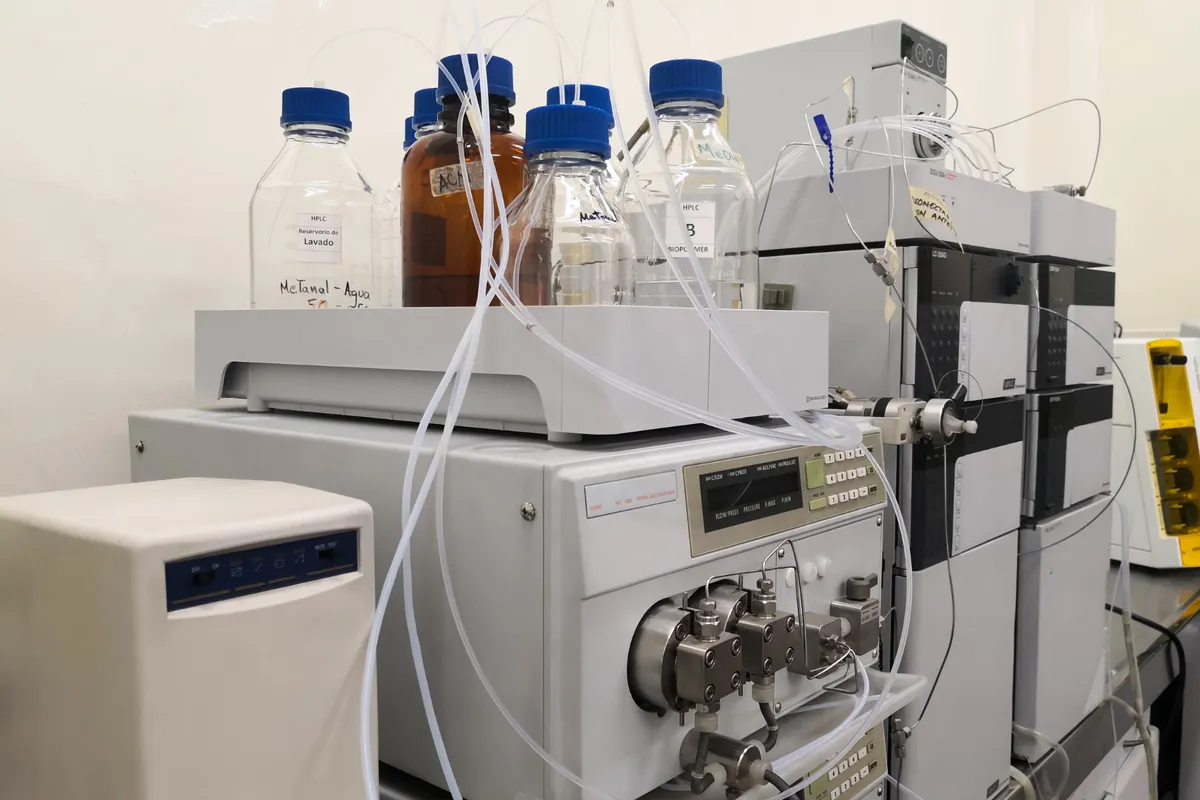
Dual extraction is a phrase worth understanding before you choose an extract.
Version 1.0 · Published: 01.06.2026
Subject-matter reviewer: Yi · functional mushroom technologist
Customers often ask: what actually separates a water extract from a hydroalcoholic one, and which compounds “disappear” if we leave out the alcohol. It’s one of the most important questions when choosing a raw material, because two extracts of the same mushroom can have entirely different active-compound profiles. The whole answer comes down to one chemical rule: like dissolves like.
In short (60 seconds)
- 💧 Water pulls out polar, water-soluble compounds: β-glucans and other polysaccharides, peptidoglycans, some glycoproteins, amino acids and certain nucleosides (cordycepin, adenosine).
- 🥃 Alcohol (ethanol) pulls out non-polar, lipophilic compounds: triterpenoids (ganoderic acids, pachymic acid, polyporusterones), sterols (ergosterol), hericenones, some polyphenols.
- 🔁 Hydroalcoholic extraction (“dual extraction”) is two separate processes combined into one product that captures both groups.
- 🍄 If a species’ activity rests mainly on polysaccharides → water extraction is enough. If triterpenes or lipophilic compounds are key → skipping alcohol leaves half the profile in the raw material.
- 📊 “Extract” without a stated method isn’t enough, because the same word describes products of different composition.
One rule: “like dissolves like”
A solvent only pulls out the compounds that chemically match it. Water is polar: it dissolves complex sugars and other polar compounds. Ethanol is less polar and dissolves lipophilic (fat-loving) compounds that water simply won’t touch.
That’s why there is no single “best extract” in the abstract. The real question isn’t “water or alcohol”, but:
💡 Where does this mushroom’s activity sit: in the sugars or in the triterpenes?
Only the answer to that decides which extraction method makes sense.
What does water pull out (hot water extraction, 80-95°C)?
Water extraction is the classical method, familiar from traditional decoctions. Hot water breaks down the mushroom’s cell walls and brings polar compounds into solution:
- β-glucans (β-1,3/1,6): the main immunomodulating fraction, recognised by Dectin-1 and TLR receptors;
- other polysaccharides: heteroglycans, peptidoglycans, GLPS (Reishi), TFPS (Tremella), pachyman (Poria);
- water-soluble glycoproteins;
- water-soluble nucleosides: cordycepin, adenosine, mannitol (Cordyceps);
- amino acids and some peptides.
💡 β-glucans are heat-stable and water-soluble, which is why β-glucan standardisation is achieved with water extraction, not alcohol.
What does only alcohol pull out (ethanol / hydroalcoholic)?
Some of the most valuable mushroom compounds are fat-loving, and water won’t extract them no matter the temperature. These fractions only enter solution in ethanol:
- triterpenoids: ganoderic acids (Reishi), pachymic acid and lanostane triterpenes (Poria), polyporusterones (Polyporus), inotodiol and betulinic acid (Chaga);
- sterols: ergosterol (provitamin D₂), ergone;
- hericenones (Lion’s Mane): non-polar, soluble only in ethanol;
- some polyphenols with higher lipophilicity.
⚠️ These compounds are bitter and fat-loving. If you make only a water extract of a mushroom whose value lies in triterpenes, you get a product without half its active profile, even though it’s “technically” still an extract.
Why is “dual extraction” two processes, not one?
You can’t fully capture both groups with a single solvent. That’s why dual extraction is:
- a hot water extraction that recovers polysaccharides and β-glucans;
- a separate ethanol extraction that recovers triterpenes and sterols;
- combining the two fractions at a declared ratio and evaporating the solvent.
This is why hydroalcoholic extracts of Reishi or Poria are more expensive and labour-intensive: they are two technological batches, not one. But only that process delivers the full profile of a triterpene species.
Table: water vs hydroalcoholic by species
| Species | Key compounds from water | Compounds only from alcohol | Recommended method |
|---|---|---|---|
| Reishi | β-glucans, GLPS, peptidoglycans | ganoderic acids (triterpenes) | hydroalcoholic |
| Lion’s Mane | β-glucans | hericenones (lipophilic) | hydroalcoholic |
| Chaga | β-glucans, polysaccharides, melanin | triterpenes (inotodiol, betulinic acid), polyphenols | hydroalcoholic |
| Cordyceps | cordycepin, adenosine, mannitol, polysaccharides | none (key compounds are water-soluble) | water is enough |
| Maitake | β-glucans, D-fraction, SX-fraction | none | water is enough |
| Coriolus | PSP / PSK (polysaccharopeptides), β-glucans | none | water is enough |
| Tremella | TFPS (glucuronoxylomannan), β-glucans | none | water is enough |
| Shiitake | lentinan (β-glucan), eritadenine | ergosterol | water (dual for ergosterol) |
| Polyporus | β-glucans, PPS | polyporusterones, ergone (sterols) | hydroalcoholic |
| Poria | pachyman, polysaccharides | pachymic acid, lanostane triterpenes | hydroalcoholic |
| Auricularia | polysaccharides, glucuronic acids | none | water is enough |
| Coprinus | β-glucans, glycoproteins | none | water is enough |
How should you read this when choosing a raw material?
The table boils down to three groups:
- Polysaccharide species (Cordyceps, Maitake, Coriolus, Tremella, Auricularia, Coprinus): a water extract gives the full profile. Dual extraction here is an unnecessary cost.
- Triterpene species (Reishi, Chaga, Polyporus, Poria): without ethanol you lose the markers on which these mushrooms’ traditional value rests.
- The special case, Lion’s Mane: β-glucans come from water, but hericenones only from ethanol. So the full profile requires hydroalcoholic extraction.
How do we do it at Aloha Fungi?
For each species we match the method to its chemistry; we don’t apply one procedure to everything. For triterpene species we use dual extraction, for polysaccharide species water. Every batch ships with a COA that states the method and the markers proper to that method, so the label claim matches what is actually in the extract.
Because “extract” isn’t enough. What matters is which method produced it and whether that method fits where the mushroom’s activity actually sits.
FAQ
What does water pull out, and what does alcohol pull out?
Water pulls out polar compounds: beta-glucans and other polysaccharides, peptidoglycans, some glycoproteins, amino acids and nucleosides (cordycepin, adenosine). Ethanol pulls out lipophilic compounds: triterpenoids (including ganoderic acids), sterols (ergosterol), hericenones and some polyphenols.
What is dual extraction?
Two separate processes, not one: hot-water extraction for polysaccharides and a separate ethanol extraction for triterpenes and sterols, combined into one product. That is why it is more expensive and labour-intensive.
Which species need dual extraction?
Triterpene species: Reishi, Chaga, Polyporus and Poria, plus Lion’s Mane, whose hericenones dissolve only in ethanol. For polysaccharide species (Cordyceps, Maitake, Coriolus, Tremella, Auricularia, Coprinus) water extraction gives the full profile.
Is a water-only Reishi extract worse?
It is incomplete. Beta-glucans pass into water, but ganoderic acids stay in the raw material. For a triterpene species, skipping ethanol means losing half of the active profile, even though the product is technically still an extract.
Read also
- The number on the label vs. real extract quality
- Drying and carriers in mushroom extracts
- Lentinan, PSK and PSP: why mushroom fractions are medicines in Japan and China, but not in the EU
Summary
Water and alcohol are not interchangeable. Water pulls out polysaccharides and β-glucans. Alcohol pulls out triterpenes, sterols and hericenones. Hydroalcoholic extraction combines both worlds, at the cost of two separate processes.
For a polysaccharide species, a water extract gives the full profile. For a triterpene species, skipping the alcohol means losing half the active compounds. And for Lion’s Mane, only combining both methods delivers what the customer is looking for.
So before you choose an extract, ask not only “which mushroom”, but “extracted by which method”, because that second answer tells you what will really be in the product.
Have specific requirements?
Build a procurement brief: catalog match, missing inputs and a ready inquiry draft. Nothing is sent.