
Lentinan, PSK and PSP: why mushroom fractions are medicines in Japan and China, but not in the EU
Lentinan from Shiitake and PSK from Coriolus are registered oncology medicines in Japan (PSK since 1977, lentinan since 1985). PSP from Coriolus and PPS from Polyporus are adjuvant medicines in China. The same species in the EU are exclusively ingredients of food supplements. For B2B brands, this is one of the toughest communication boundaries in the functional-mushroom industry: a compound pharmacologically proven in one jurisdiction, and in another not authorised for any medical claims.
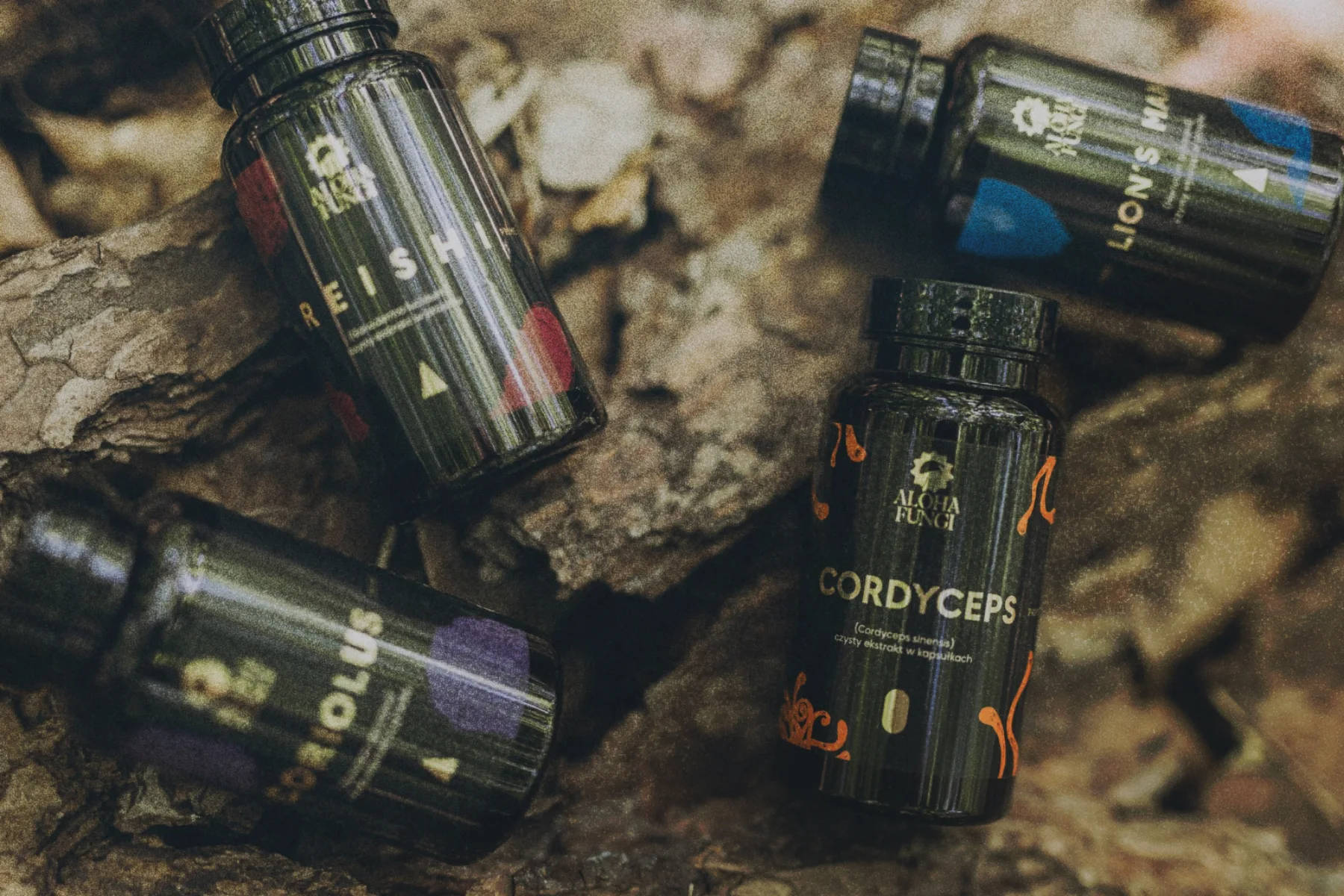
Lentinan shows how the same molecule can be a medicine and a supplement at once.
Version 1.0 · Published: 26.05.2026
Subject-matter reviewer: Mateusz Rosa, founder of Aloha Fungi, international TCM therapist (Doctor of Acupuncture Level A certificate issued by WFAS, an NGO in official relations with WHO, 2018)
⚠️ Technical article for the B2B industry (R&D, compliance, marketing). Content is NOT medical or legal advice. Consumer-facing product communication requires validation by a food-law attorney.
Lentinan from Shiitake and PSK from Coriolus are registered oncology medicines in Japan (PSK since 1977, lentinan since 1985), administered as injections. PSP from Coriolus and PPS from Polyporus are adjuvant medicines in China for selected indications. The same species · Lentinula edodes, Trametes versicolor, Polyporus umbellatus · in the European Union are exclusively ingredients of food supplements, with no authorised EFSA health claim.
For B2B brands, this is one of the toughest communication boundaries in the functional-mushroom industry: a compound pharmacologically proven in one jurisdiction, and in another not authorised for any medical claims.
In short (60 seconds)
- 💊 Lentinan (β-glucan from Shiitake, L. edodes) · oncology medicine in Japan since 1985 (gastric cancer and non-small-cell lung cancer), intravenous injection, manufactured by Ajinomoto, trade name Lentinan Ajinomoto.
- 💊 PSK / krestin (polysaccharide-K from Coriolus, T. versicolor) · adjuvant medicine in Japan since 1977 (gastric, colorectal, breast and nasopharyngeal cancer), manufactured by Kureha, name Krestin (PSK).
- 💊 PSP (polysaccharide-peptide from Coriolus, strain COV-1) · in China an adjuvant medicine for chronic hepatitis B and adjuvant therapy.
- 💊 PPS (Polyporus Polysaccharide from Polyporus umbellatus) · in China an adjuvant medicine in injection (chronic hepatitis B, bladder cancer after BCG).
- 🇪🇺 In the EU all four compounds = ingredients of food supplements, no authorised EFSA claim, no registration as medicines.
- ⚠️ Critical for brands: citing these medical statuses in supplement marketing in the EU = violation of Regulation 1924/2006.
Definitions: what are lentinan, PSK, PSP and PPS?
These are four isolated polysaccharide or polysaccharide-peptide fractions from the cell walls of functional mushrooms. Each has a distinct history of isolation, a distinct structure and a distinct regulatory status.
| Fraction | Source species | Year of isolation | Structure | Molecular mass |
|---|---|---|---|---|
| Lentinan | Lentinula edodes (Shiitake) | 1969 (Goro Chihara, JP) | β-1,3 glucan with β-1,6 branches, triple-helix structure | 500–1000 kDa |
| PSK / Krestin | Trametes versicolor (Coriolus, strain CM-101) | 1971 (Kureha Chemical, JP) | Polysaccharide-protein, β-glucan with 25–38% peptide | ~94 kDa |
| PSP | Trametes versicolor (strain COV-1) | 1983 (Yang Qing-yao, Shanghai Normal University, CN) | Polysaccharide-peptide, β-glucan with 10–30% peptide | ~100 kDa |
| PPS | Polyporus umbellatus | 1980s (China) | β-1,3/1,6 glucan-peptide | 30–100 kDa |
All four are structurally related (β-glucans with peptide modifications) and all four bind to immune receptors: Dectin-1, TLR2, TLR4, CR3 · activating innate immunity. Despite a similar mechanism at the molecular level, each has a distinct legal status depending on the jurisdiction.
💡 Fraction vs. extract: not the same thing. Lentinan and PSK in Japan are purified pharmaceutical fractions standardised to exact molecular mass and purity. Our Shiitake or Coriolus fruiting-body extract contains these fractions in a mixture with other compounds · that is a food supplement, not a pharmaceutical standard.
Lentinan: what was the first success story?
Goro Chihara of the National Cancer Center Research Institute in Tokyo published in 1969 in Nature (vol. 222, pp. 687–688) the isolation of a β-glucan fraction from the Shiitake fruiting body with strong anti-tumour activity in the Sarcoma 180 animal model. The fraction was named lentinan (after Lentinus, the genus name at the time).
Mechanism: lentinan, as a β-1,3 glucan with β-1,6 side branches and a triple-helix structure, binds to the Dectin-1 receptor on dendritic cells, macrophages and monocytes. It activates a signalling cascade through Syk and NF-κB, leading to dendritic-cell maturation, T-helper 1 activation, increased production of IL-12, IFN-γ and TNF-α, and stimulation of NK-cell activity [Brown & Gordon 2003; Xu et al. 2016, Sci Rep].
Registration as a medicine in Japan (1985)
In 1985 lentinan was registered in Japan by Ajinomoto Co. as an adjuvant medicine in chemotherapy for gastric cancer. The indications were later extended to non-small-cell lung cancer. Form: intravenous injection only. The oral form has significantly lower bioavailability and has not been registered as a medicine.
Clinical evidence:
- A meta-analysis by Yin et al. [2015, Indian J Cancer, n=950 patients, 12 RCTs] showed that adding injectable lentinan to chemotherapy regimens in non-small-cell lung cancer improves response rates (RR=1.31, 95% CI 1.14–1.52).
- An RCT in healthy adults by Dai et al. [2015, J Am Coll Nutr, n=52, 4 weeks, 5–10 g of dried Shiitake/day] showed improved γδ T-cell function and reduced CRP · a rarity in the functional-mushroom space: an RCT in HEALTHY humans with a dietary dose, not lentinan injection.
→ More: Shiitake product page.
PSK / Krestin: what was the chemotherapy pathway?
Kureha Chemical in Japan isolated polysaccharide-K (PSK) from strain CM-101 of Trametes versicolor in 1971. In 1977 PSK was registered in Japan as a medicine under the trade name Krestin for gastric, colorectal, breast and nasopharyngeal cancer, non-small-cell lung cancer and lymphatic tumours.
Form: oral (powdered concentrate) · one of the FEW mushroom oncology medicines administered orally and registered in any country. For decades PSK was one of the most frequently prescribed oncology medicines in Japan · at the peak of its popularity (the 1980s and 1990s), Krestin generated revenue of around 300 million USD per year for Kureha.
Clinical evidence and meta-analyses
- The meta-analysis by Eliza et al. [2012, Recent Pat Inflamm Allergy Drug Discov] covered 23 RCTs with PSK in adjuvant oncology. It showed a statistically significant effect on 5-year survival in patients with resected gastric and colorectal cancer in PSK + chemotherapy vs. chemotherapy alone regimens.
- Wenner et al. [2012, Int J Oncol] · PSK potentiates the action of docetaxel in an animal model of prostate cancer.
- Standish et al. [2008, Integr Cancer Ther] · PSK as adjuvant therapy in breast cancer.
PSK status in the EU
In the EU, PSK is NOT registered as a medicine. There is no authorised EFSA health claim. Coriolus fruiting-body extracts are available as food-supplement ingredients, but they do not contain the isolated, purified PSK fraction in pharmaceutical standard · this is an important distinction.
→ More: Coriolus product page.
PSP: what is the Chinese answer to PSK?
Yang Qing-yao of Shanghai Normal University isolated polysaccharide-peptide (PSP) from strain COV-1 of Trametes versicolor in 1983 (a Chinese selection, different from the Japanese CM-101). PSP is closely structurally related to PSK, but has a different monosaccharide profile and a smaller peptide share (10–30% vs. 25–38%).
In China, PSP is registered as an adjuvant medicine for:
- chronic viral hepatitis B,
- adjuvant therapy in selected cancers (mainly gastric and colorectal).
A unique position for PSP: a prebiotic RCT in healthy humans
Pallav et al. [2014, Gut Microbes, Beth Israel Deaconess Medical Center, Boston] ran an 8-week RCT with n=24 healthy volunteers, comparing PSP 3600 mg/day vs. amoxicillin 250 mg/day. PSP increased the abundance of Bifidobacterium and Lactobacillus (prebiotic action), and in the amoxicillin group PSP helped to restore flora after antibiotic therapy.
This is the only direct prebiotic-vs.-antibiotic RCT in humans in the functional-mushroom literature. Importantly: the study was conducted in the USA, not in China · which adds credibility to the clinical data for Western markets.
PPS: what is the Chinese medicine from Polyporus?
PPS (Polyporus Polysaccharide) from Polyporus umbellatus (Zhu Ling in TCM, umbrella polypore in English) is registered in China as an adjuvant medicine in injection for two main indications:
- Chronic viral hepatitis B · hepatoprotection, immune modulation.
- Bladder cancer after BCG therapy (Bacillus Calmette-Guérin) · adjuvant immunotherapy.
Zhang et al. [2015, Carbohydr Polym] document the efficacy of PPS with BCG in inhibiting bladder carcinogenesis in an animal model.
Mechanism: PPS binds to the TLR4 receptor on dendritic cells and macrophages. This is a significantly different mechanism from PSK/PSP (TLR2) and lentinan (Dectin-1) · which is an argument for complementary combinations of fractions from different species.
In the EU, Polyporus umbellatus is a food-supplement ingredient. PPS in injectable form is not registered as a medicine. The oral extract from our sclerotium does not contain the purified PPS fraction in pharmaceutical standard.
Additionally: in Poland, P. umbellatus has been under strict species protection since 2014 · wild harvest is absolutely prohibited, all extracts come from legal controlled cultivation.
→ More: Polyporus product page.
Summary table: jurisdictions and statuses
| Fraction | Species | Japan | China | European Union | USA |
|---|---|---|---|---|---|
| Lentinan | Shiitake | 💊 MEDICINE (1985, injection, Ajinomoto, gastric cancer/NSCLC) | Supplement ingredient | Supplement ingredient | Supplement ingredient (dietary supplement) |
| PSK / Krestin | Coriolus CM-101 | 💊 MEDICINE (1977, oral, Kureha, adjuvant oncology) | Supplement ingredient | Supplement ingredient | Supplement ingredient |
| PSP | Coriolus COV-1 | Supplement ingredient | 💊 MEDICINE (hepatitis B, adjuvant oncology) | Supplement ingredient | Supplement ingredient |
| PPS | Polyporus | Supplement ingredient | 💊 MEDICINE (injection, hepatitis B, bladder cancer + BCG) | Supplement ingredient | Supplement ingredient |
💡 Three of the four best-documented mushroom fractions have medicine status in East Asia. In the EU and USA, all are exclusively food supplements. This is NOT a matter of quality or safety · it is a difference in regulatory systems and clinical history.
Why do these differences exist?
Japan: Kampo and the state pharmacopoeia
Japan is the only highly developed country in which traditional medicine (Kampo, the Japanese counterpart of TCM) is officially integrated into the health system. The Ministry of Health (MHLW, Japanese Ministry of Health, Labour and Welfare) lists Kampo preparations in the Japanese Pharmacopoeia (JP) and reimburses them through social insurance.
Lentinan and PSK entered the market in a period (the 1970s and 1980s) when Japanese pharmaceutical companies (Kureha, Ajinomoto) ran integrated R&D programmes combining traditional mycology with modern biochemistry. The registration standard required:
- precise structural characterisation (NMR, SEC-MALS),
- molecular-mass standardisation,
- clinical evidence in multiple phases (Phase I, II, III RCTs),
- adverse-event monitoring in pharmacovigilance.
China: TCM and the Chinese Pharmacopoeia
In China, Traditional Chinese Medicine (TCM) is constitutionally integrated with Western medicine. The Chinese Pharmacopoeia (中华人民共和国药典) contains both systems. The national NMPA (National Medical Products Administration) registers TCM preparations as full medicines if they pass the required tests.
PSP and PPS entered the Chinese market in the 1990s as adjuvant medicines in regimens for chronic hepatology (hepatitis B · a large Chinese population) and adjuvant oncology. The NMPA registration standard is significantly more lenient than the EMA’s (European Medicines Agency), but still requires controlled clinical trials.
European Union: the EMA pathway and Novel Food
In the EU, registration as a medicine requires going through the European Medicines Agency (EMA) or national agencies (in Poland: URPL, Polish Office for Registration of Medicinal Products). The pathway requires:
- multi-centre Phase III RCTs with large populations,
- quality documentation in line with ICH (International Council for Harmonisation),
- a complete characterisation of safety, pharmacokinetics and interactions.
None of the four mushroom fractions has gone through this pathway in the EU. Not because they are ineffective · but because the cost of registration (in the order of tens to hundreds of millions of EUR) is economically unjustifiable for functional-mushroom producers in the absence of a patent (lentinan and PSK have been in the public domain for decades).
In parallel, at the food-ingredient level, the EU applies Regulation 2015/2283 on Novel Food. The species L. edodes, T. versicolor and P. umbellatus are permitted on the basis of historical use pre-1997 (grandfather-clause status), but without the right to health claims that would require EFSA registration.
EFSA and Regulation 1924/2006
In the EU, health claims on food are governed by Regulation (EC) 1924/2006. As of 2026: none of the compounds typical of functional mushrooms (mushroom β-glucans, hericenones, ganoderic acid, cordycepin, lentinan, PSK, PSP) has an authorised EFSA claim.
The approved claim for β-glucans applies exclusively to β-glucans from oats and barley in the context of maintaining normal LDL cholesterol levels (Regulation 432/2012). It does not automatically extend to mushroom β-glucans, even though they belong structurally to the same class.
What does this mean for B2B brands?
A paradoxical situation: the same compounds that in Japan and China are prescribed by oncologists and reimbursed by social insurance, a supplement brand in the EU may not even mention in an oncology context.
What IS allowed in EU communication
| Safe phrasing | Why |
|---|---|
| ”Shiitake · a traditional mushroom used in East Asian cuisine for centuries” | culinary tradition |
| ”Shiitake fruiting-body extract with a standardised β-glucan content” | description of composition |
| ”Coriolus is traditionally used in TCM as Yun Zhi, a classical ingredient of Materia Medica formulas” | TCM tradition |
| ”Lentinan · a β-glucan fraction first isolated from Shiitake by Goro Chihara in 1969” | historical and scientific fact |
| ”Polyporus classically used in TCM in Zhu Ling Tang formulas (Shang Han Lun, ca. 220 CE)“ | TCM tradition |
| ”The mechanism of Dectin-1 / TLR2 activation is described in peer-reviewed literature” | description of mechanism |
What Regulation 1924/2006 PROHIBITS
| ❌ Prohibited phrasing | Why |
|---|---|
| ”Lentinan supplement for gastric cancer” | suggestion of a medicine, oncology claim |
| ”PSK / Krestin in a supplement” | suggests the product = a medicine registered in JP |
| ”Coriolus · adjuvant therapy in chemo” | ICD-10 medical claim |
| ”Polyporus for bladder cancer relapse” | ICD-10 medical claim |
| ”PPS hepatoprotector in hepatitis B” | ICD-10 medical claim |
| ”A natural alternative to chemotherapy” | medicine claim + medical communication |
| ”Clinical efficacy confirmed by Japanese/Chinese registrations” | suggests transfer of medicine status to a supplement |
Practical consequence for the brand manager
A B2B brand selling extracts of Shiitake, Coriolus or Polyporus has to separate TWO worlds in consumer communication:
- The scientific and historical world (lentinan as a fraction, PSK as a 1977 discovery, TCM tradition) · ALLOWED to describe and cite.
- The regulatory world of medicine status (Lentinan Ajinomoto, Krestin Kureha, Chinese oncology regimens) · can be MENTIONED as industry/historical information, but NOT in the context of one’s own supplement product.
The line: between “Goro Chihara isolated a fraction named lentinan from Shiitake in 1969” (OK) and “our product contains lentinan, which is a medicine in Japan” (NOT OK · suggests supplement = medicine).
How we at Aloha Fungi work with this boundary
Three of the eleven products in our portfolio relate directly to this topic:
- Shiitake · fruiting-body extract of L. edodes with a lentinan declaration, but without an oncology medicine claim.
- Coriolus · fruiting-body extract of T. versicolor with a PSP fraction declaration, but without a PSK/Krestin claim.
- Polyporus · sclerotium extract of P. umbellatus with a PPS declaration, but without a Chinese medicine claim.
In every product page we have a dedicated consumer-communication section (section H) with three critical regulatory risks, an amber box in the regulatory status (section L) describing the JP/CN vs. EU difference, and a JSX comment {/* DECISION: validation by a food-law attorney */} for the team.
For partners we offer:
- Aloha Fungi Approved · batches with a declared minimum of lentinan/PSP/PPS and full DNA barcoding of the species.
- Technical documentation supporting GIS notification in Poland.
- Materials for copywriters with safe phrasings.
- Compliance consulting when planning consumer communication.
We do not replace a food-law attorney · we recommend that every brand independently validate marketing content before publication.
🇵🇱 The Polish research thread
Polish research on mushroom polysaccharides in the PSK/PSP context is conducted by the team of Prof. Bożena Muszyńska at the Department of Pharmaceutical Botany, Collegium Medicum, Jagiellonian University in Kraków. The publication Sułkowska-Ziaja, Muszyńska, Sałaciak, Gawalska (2016) in Postępy Fitoterapii 17(4):274–281 · “Trametes versicolor (L.) Lloyd as a source of biologically active compounds with a broad spectrum of action and application” · describes PSK and PSP, terpenoid fractions and the mechanism of immune activity. This is a Polish-language review published in a peer-reviewed phytotherapy journal, a good scientific source to cite in Polish B2B communication.
What does this mean for the industry?
Lentinan, PSK, PSP and PPS are an example of the deepest regulatory gap in the functional-mushroom industry: a compound that is pharmacologically well described, clinically proven and registered as a medicine in Japan or China, has the status of an ordinary supplement ingredient in the EU with no right to a claim.
For a brand, this means:
- By choosing a species from Shiitake/Coriolus/Polyporus, you are buying a strong scientific history · you can describe it as a historical and scientific fact, WITHOUT transferring the medicine status to your own product.
- Marketing materials MUST go through validation by a food-law attorney · the line is thin and enforced by UOKiK and GIS.
- Technical documentation matters · the more data you have on fraction standardisation in your product (lentinan/PSP/PPS at a declared percentage), the easier it is to communicate composition without suggesting a medicine.
- The Polish research thread (Muszyńska 2016) is a strong credibility argument for Polish communication · it provides distance from Japanese/Chinese registrations.
A product’s success depends on extract quality, documentation, compliant communication and a good fit to function. The mere fact that a substance is a medicine in another jurisdiction is not a marketing argument in the EU · it is a scientific and historical argument, but legally empty.
🗣️ According to Mateusz Rosa, founder of Aloha Fungi:
“The worst thing a brand can do is cite the PSK registration in Japan or PPS in China as a sales argument in the EU. It is simultaneously a suggestion of a medicine and an admission that our supplement works like chemo · the two worst directions for compliance and brand reputation. A description of tradition, the history of discovery, mechanism and the Polish research thread is better.”
Two paths of cooperation
| 🤝 B2B Supplement brands, copywriters, R&D, compliance | 🍵 B2C End customer |
|---|---|
| Planning a product with Shiitake, Coriolus or Polyporus? | Not sure how to read a supplement label with lentinan or PSP? |
| We will match the extract with a fraction declaration + prepare technical documentation + review your marketing materials from a compliance perspective. | Fill in the survey and get a recommendation. |
In a DM write: B2B | In a DM write: MATCH |
| → Compliance hub or Aloha Fungi Approved | → Matching quiz |
We don’t sell mushrooms. We match them. Regulation, not magic.
FAQ
What are lentinan, PSK, PSP and PPS?
Four isolated polysaccharide or polysaccharide-peptide fractions from mushroom cell walls: lentinan from Shiitake (isolated in 1969 by Goro Chihara), PSK/Krestin and PSP from Coriolus, PPS from Polyporus. All bind innate-immunity receptors (Dectin-1, TLR2, TLR4, CR3).
Where are these fractions medicines?
PSK has been a registered oncology medicine in Japan since 1977, and lentinan since 1985. PSP and PPS are supportive medicines in China. In the European Union the same species are only food supplement ingredients.
Why are they not medicines in the EU?
Registration requires the EMA pathway: multi-centre phase III trials and ICH-grade documentation, and the cost of tens to hundreds of millions of euros is unjustifiable without a patent · lentinan and PSK have been in the public domain for decades. No compound typical of functional mushrooms has an authorised EFSA claim either.
What can you say about Shiitake or Coriolus in the EU?
Composition and tradition: “Shiitake fruiting-body extract with a standardised beta-glucan content”, “Coriolus traditionally used in TCM as Yun Zhi”, or historical-scientific facts. Medical claims are prohibited, as is suggesting that the drug status from Japan or China transfers to a supplement.
Read also
- Water or alcohol: what extraction actually pulls out
- The number on the label vs. real extract quality
- Fruiting body, mycelium, mycelium grown on grain
About the author
Mateusz Rosa is the founder of Aloha Fungi, an international TCM therapist with 8 years of therapeutic practice. He holds the Doctor of Acupuncture (Level A) certificate issued by the World Federation of Acupuncture-Moxibustion Societies (WFAS, an NGO in official relations with WHO, 2018). Author of the books “Awakening of Health” and “Supplementation with Functional Mushrooms”. At Aloha Fungi he is responsible for extract selection, raw-material standards, customer education and product collaborations.
Regulatory disclaimer
The content of this article is educational and technical for the B2B industry. It does not replace medical or legal consultation or a professional compliance assessment of a cosmetic/food product. A food supplement may not be used as a substitute for a varied diet and a healthy lifestyle and may not be advertised as a medicine or as having medicinal properties.
The described regulatory statuses (registrations of lentinan, PSK, PSP, PPS as medicines in Japan and China) apply exclusively to those jurisdictions. In the European Union none of these fractions has medicine status or an authorised EFSA health claim. Consumer communication for products containing these ingredients must comply with Regulation (EC) No 1924/2006 on nutrition and health claims. Citing medical status from other jurisdictions in supplement marketing in the EU may be interpreted as misleading the consumer and subject to UOKiK/GIS sanctions.
The brand is responsible for validating marketing content with a food-law attorney before publication.
Bibliography18 sources
- Chihara G et al. (1969). Inhibition of mouse Sarcoma 180 by polysaccharides from Lentinus edodes (Berk.) Sing. Nature 222(5194):687–688.
- Yin X et al. (2015). Meta-analysis of 12 RCTs (n=950) · injectable lentinan + chemotherapy in non-small-cell lung cancer. Indian J Cancer. PMID: 26548936.
- Dai X et al. (2015). RCT n=52 healthy adults, 4 weeks, 5–10 g of dried Shiitake/day. J Am Coll Nutr. PMID: 25866155.
- Xu H et al. (2016). Mechanism of anti-tumour activity of β-glucan from L. edodes · Dectin-1, CR3. Sci Rep.
- Eliza WL, Fai CK, Chung LP (2012). Meta-analysis of 23 RCTs with PSK in adjuvant oncology. Recent Pat Inflamm Allergy Drug Discov. PMID: 22167330.
- Wenner CA et al. (2012). PSK potentiates docetaxel in an animal model of prostate cancer. Int J Oncol. PMID: 22179060.
- Standish LJ et al. (2008). Trametes versicolor in adjuvant therapy for breast cancer · a clinical review. Integr Cancer Ther. PMID: 18815143.
- Pallav K et al. (2014). RCT n=24, 8 weeks, PSP 3600 mg/day vs. amoxicillin, effect on gut microbiota. Beth Israel Deaconess Medical Center Boston. Gut Microbes. PMID: 25006989.
- Saleh MH, Rashedi I, Keating A (2017). Molecular mechanism of PSP and PSK · TLR2 as the target receptor. Front Immunol. PMID: 28932226.
- Habtemariam S (2020). Trametes versicolor polysaccharides (PSK/PSP) · molecular targets and efficacy in cancer therapy. Biomedicines. PMID: 32466253.
- Li X, Xu W, Chen J (2010). Polysaccharide from Polyporus umbellatus activates dendritic-cell maturation via TLR4. Cell Immunol. PMID: 20673881.
- Zhang GW et al. (2015). Efficacy of Polyporus polysaccharide with BCG in inhibiting bladder cancer. Carbohydr Polym. PMID: 25542103.
- Brown GD, Gordon S (2003). Mushroom β-glucans and mammalian immunity, Dectin-1. Nature. PMID: 12646903.
- Sułkowska-Ziaja K, Muszyńska B, Sałaciak K, Gawalska A (2016). Trametes versicolor (L.) Lloyd as a source of biologically active compounds with a broad spectrum of action and application. Postępy Fitoterapii 17(4):274–281. Department of Pharmaceutical Botany, Collegium Medicum, Jagiellonian University.
- Regulation (EC) No 1924/2006 of the European Parliament and of the Council of 20 December 2006 on nutrition and health claims made on foods.
- Regulation (EC) No 432/2012 establishing a list of permitted health claims made on foods.
- Regulation (EU) 2015/2283 on novel foods.
- European Commission. EU Register of nutrition and health claims made on foods. ec.europa.eu
Have specific requirements?
Build a procurement brief: catalog match, missing inputs and a ready inquiry draft. Nothing is sent.