
Short supply chain in functional mushrooms
"We have a direct source", almost every brand writes this today. We explain how raw material that has passed through several intermediaries differs from raw material whose origin we actually know, and why this matters for quality.
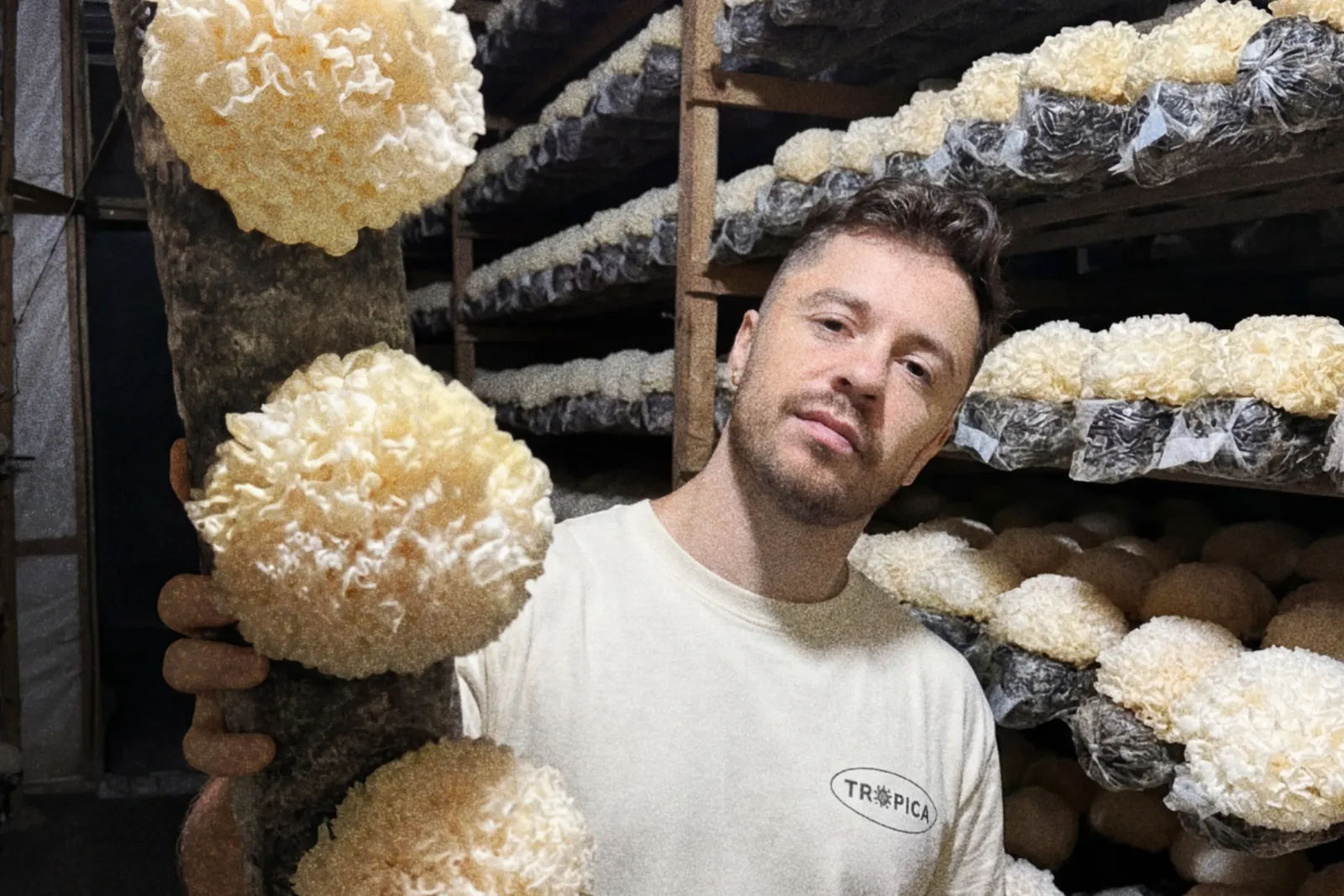
A short supply chain is easy to claim and harder to show.
“We have a direct source” · almost every brand writes this today.
In the world of functional mushrooms, this is one of those phrases that sounds good on a website but on its own means very little. Because “direct source” can mean very different things.
It can mean that a brand buys an extract from a European distributor, who bought it from a larger intermediary, who bought it from an exporter, who in turn works with a factory somewhere in Asia.
It can mean that someone has a contact at a trading company but has never seen the cultivation, never spoken to a farmer, and has no idea where exactly the fruiting body comes from.
But it can also mean something entirely different: that we know the people who actually stand behind the raw material. That we know where the mushrooms grew, on what substrate, under what conditions, how they were dried, processed, extracted, packaged and tested.
And that difference is enormous.
Not only in terms of quality. Also ethically, logistically and from a health perspective.
Why doesn’t a mushroom begin in a capsule?
For most consumers, the product begins the moment they see a jar, a sachet or a label.
But real quality begins much earlier.
Before a mushroom ends up in a capsule, powder, tincture, coffee or cacao, it goes through many stages. First comes the decision about the material: do we use a fruiting body, mycelium, an extract, a powdered raw material, or a blend of several forms? Then come questions of cultivation, harvest, drying, extraction, standardisation, testing and transport.
At each of these stages something can be done well.
And at each of them, corners can be cut.
That’s why the question isn’t simply: “Does the product contain Reishi, Chaga or Lion’s Mane?”
The real question is:
Where does this mushroom come from and how many hands had control over it before it reached you?
How many hands separate the farm from the label?
In the supplement industry, raw material very often passes through several layers of intermediaries.
A farmer cultivates the mushrooms. A local company buys the raw material. Another company dries it or mills it. The next one makes an extract. An exporter sells it on. A European distributor buys a larger batch and distributes it to brands. The end brand pours the product into packaging, sticks on a label and communicates “premium quality”.
On paper, everything can look fine.
There’s an invoice. There’s a specification. There’s a Latin name. There’s information about beta-glucans. Sometimes there’s even a certificate of analysis.
But the more hands along the way, the harder it becomes to answer basic questions:
- Do we know exactly where the mushrooms grew?
- Do we know the cultivation conditions?
- Do we know the person responsible for the raw material?
- Do we know whether fruiting bodies, mycelium or a blend were used?
- Do we know what the drying process looked like?
- Do we know whether the extract was made for quality or for price?
- Can we request additional testing on a specific batch?
- Can we quickly clarify ambiguities in the documents?
In a long supply chain, the answer is often: “we don’t know, we’ll ask the supplier.”
And the supplier asks their supplier.
And that one asks the next.
And suddenly it turns out that “direct source” is just a nice phrase, not real control.
What does a short supply chain give you?
A short supply chain isn’t simply about “buying cheaper”.
That’s far too shallow a reading of the topic.
A short supply chain means fewer people stand between the brand and the place where the raw material originates. And the fewer people along the way, the greater the transparency.
In practice this means we can check more carefully:
- what the cultivation looks like,
- what material is being used,
- what the drying standards are,
- how extraction is carried out,
- whether a given batch makes technological sense,
- whether the documentation matches reality,
- whether the manufacturer understands what matters to the end customer.
This isn’t a romantic story about a farmer with a basket of mushrooms.
It’s a very concrete quality advantage.
Because when we know the source, we can ask harder questions. We can demand tests. We can reject a batch. We can compare raw materials. We can verify whether marketing declarations have any backing in the actual product.
And if something doesn’t add up · we know who to go back to.
Farmer, factory and brand must speak the same language
In functional mushrooms, quality doesn’t depend on cultivation alone.
You can have an excellent fruiting body and ruin it with bad drying. You can have good raw material and turn it into a mediocre extract. You can have a correct extract but fail to test it properly. You can also have a very potent product but describe it on the label in a way that’s unclear or exaggerated.
That’s why for us it matters not only who cultivates the mushrooms, but also who processes them and how they understand the whole process.
Functional mushrooms aren’t just an ordinary powder.
They’re biological raw materials that vary depending on species, place of cultivation, substrate, environmental conditions, harvest timing and extraction method.
Reishi cultivated on appropriate wood will be something different from material produced solely for mass yield. Chaga associated with birch follows a different logic than a random powder labelled “chaga”. Lion’s Mane as a fruiting body is something different from cheap mycelium grown on grain. Cordyceps requires a completely different approach to standardisation than Reishi or Chaga.
That’s why a short supply chain matters.
It allows us to talk not just about price, but about specifics: about the raw material, extraction, active compounds, testing and the product’s actual function.
Fewer intermediaries, less ambiguity
A long supply chain creates many points where problems can appear.
Sometimes it’s missing documentation. Sometimes an unclear name for the raw material. Sometimes a certificate that refers to a different batch. Sometimes a declared active-compound content that no one can confirm. Sometimes a lack of knowledge about whether the product was tested for heavy metals, pesticides or microbiology.
With a short supply chain, control is much easier to maintain.
Not because the world suddenly becomes ideal.
Just because there’s less fog along the way.
If a question comes up about a batch, we can go back to the source. If we need additional testing, we know who to talk to. If we want to change a specification, we can work directly with the manufacturer. If we see that some parameter doesn’t meet our expectations, we can react before the product enters the market.
This is the difference between buying raw material from a catalogue and building relationships with the people who actually create it.
Why isn’t price the only cost?
In the supplement industry, people often talk about the price of raw material per kilogram.
But price per kilogram alone doesn’t show the full picture.
Cheap raw material can be expensive if it has poor quality, incomplete documentation, low levels of active compounds, or requires additional corrections. Expensive raw material can be reasonable if it’s clean, well-tested, stable and reproducible.
A short supply chain helps us better understand what we’re really paying for.
Are we paying for actual quality? Or for the margins of several intermediaries? For a marketing story? For testing? For standardisation? For certainty of origin?
For us, quality isn’t about finding the cheapest possible extract.
It’s about finding raw material that makes sense biologically, technologically and ethically.
Where does declaration end and transparency begin?
Today it’s easy to write: “clean composition”, “premium”, “lab tested”, “direct source”.
It’s harder to show what stands behind it.
Transparency isn’t about throwing a few nice words on a label. It’s about being willing to show the process: where the raw material comes from, how it was prepared, what was tested, what decisions were made along the way, and why.
Not every customer needs to know all the extraction details.
But the brand should.
Because if a brand doesn’t understand its own raw material, the customer is mainly buying a story.
And we believe that in functional mushrooms, the story has to follow reality, not the other way around.
Why this matters beyond marketing
A short supply chain isn’t just a sales argument.
It’s a way of working.
It’s greater control over quality. Better communication with the manufacturer. Faster reaction to problems. A more honest relationship with the customer. A greater chance that the product in the package actually matches what the label promises.
At Aloha Fungi we treat functional mushrooms as something more than a trend.
These are raw materials with a long history, enormous potential, and they demand respect. But that respect isn’t about beautiful photos of forests, ceremonies and nature.
It’s about specifics.
About questions. About documents. About testing. About relationships. About decisions made before a product goes on sale.
Because in the end, the customer doesn’t consume “marketing”.
They consume a product.
From source to ritual
For us a functional mushroom begins much earlier than the moment someone pours powder into their cacao or takes a capsule in the morning.
It begins in the place where it grows.
In the decision of who cultivates it. In the decision of how it’s harvested. In the decision of how it’s dried. In the decision of how it’s extracted. In the decision of whether every meaningful batch is tested. In the decision of how much truth is shown to the final person who will use it.
A short supply chain isn’t a trendy slogan for us.
It’s a foundation of trust.
Because when we know the source, we can take greater responsibility for the product.
And in the world of functional mushrooms, responsibility matters more than the prettiest label.
FAQ
What does “direct source” really mean?
Often just a contact at a trading company, with no knowledge of the farm. It really means: we know where the mushrooms grew, on what substrate, and how they were dried, processed, extracted, packed and tested. For us it also means we know the farmers personally, and our partner lives in China and works at the source.
What does a short supply chain give you?
Fewer people between the brand and the source, which means more transparency: you can inspect the farm and the material, demand tests, reject a batch, and when something is off, you know who to go back to.
How many hands usually separate the farmer from the label?
Farmer, buyer, drying or milling, extraction, exporter, European distributor, brand. The more layers, the harder the basic questions about a batch become, and the more often the answer is “we don’t know, we’ll ask the supplier”.
Why isn’t the price per kilogram everything?
Cheap raw material can be expensive if it has weak quality, incomplete documentation or a low level of active compounds. A short chain shows what you are paying for: quality, testing and certainty of origin, or middlemen margins.
Read also
Have specific requirements?
Build a procurement brief: catalog match, missing inputs and a ready inquiry draft. Nothing is sent.