
Functional mushroom chocolate: the market, the drop, and what it means for brands
Functional chocolate is one of the fastest-growing carriers for functional mushrooms. We share market data, two of our products, and the lessons from a drop that sold out in one hour.
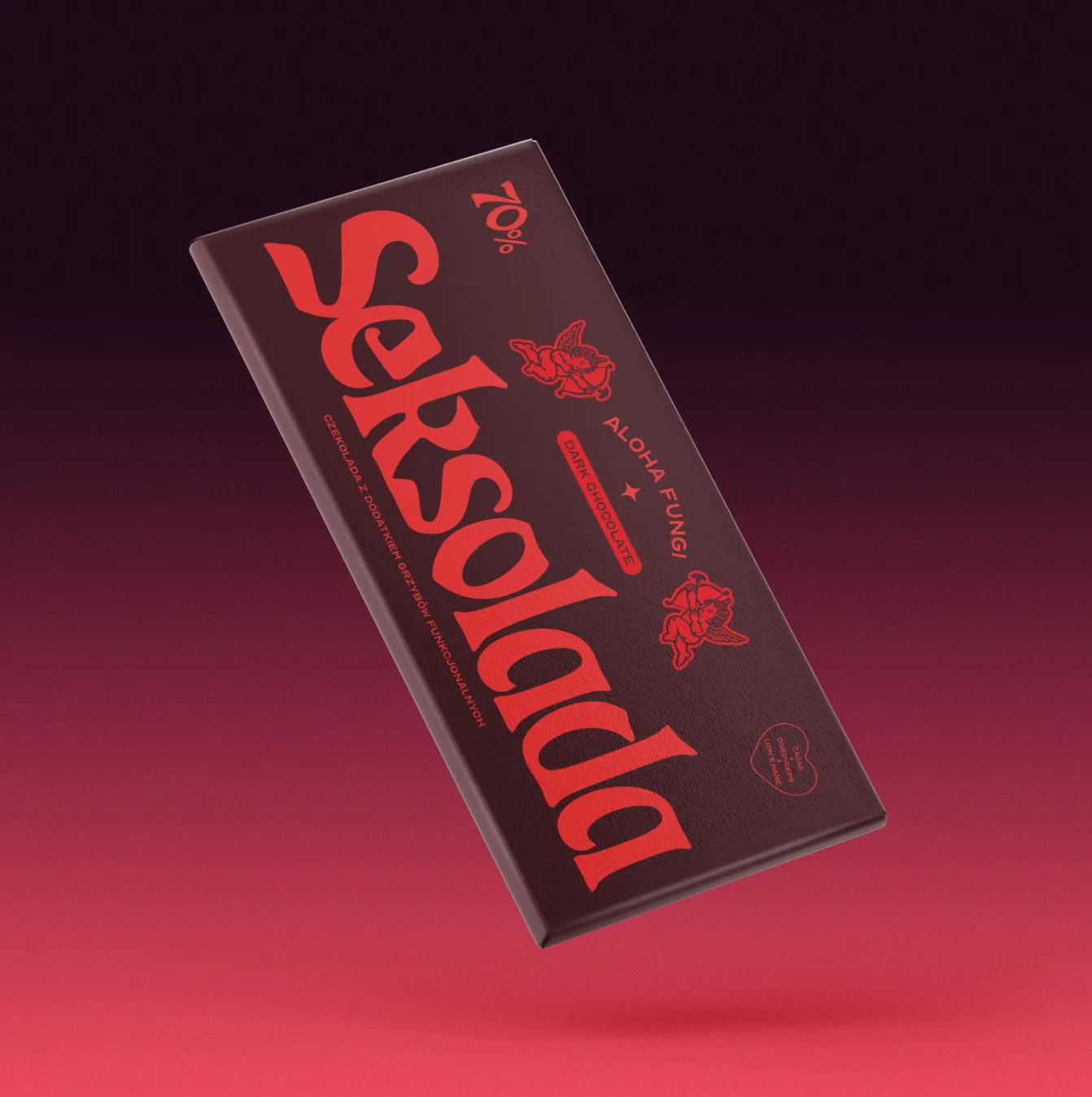
Mushroom chocolate is a format we have tested with our own drop.
Version 1.0 · Published: 02.06.2026
Subject-matter reviewer: Aloha Fungi Team
Functional chocolate is one of the fastest-growing “carriers” for functional mushrooms. The customer gets a familiar format (a bar), and the brand gets a channel for active compounds without a capsule or powder. Here is what the category is, where the market is heading, and what we learned from our own drop that sold out in an hour.
In short (60 seconds)
- 🍫 Functional chocolate is characterised by a high cacao content (70 to 100%) as a carrier for taste and polyphenols, plus active ingredients (mushroom extracts, adaptogens) instead of a lot of sugar.
- 📈 The market is growing: functional chocolate is around 5bn USD (2025) heading to ~9bn USD (2033), CAGR ~7% (some forecasts say 8.9% to 2034).
- 🍄 It is driven by the functional mushroom category (36 to 59bn USD between 2025 and 2032) and adaptogens.
- ⚡ Proof of demand: our limited drop of two chocolates (Seksolada, ChillKolada) for top customers and community sold out in ~1 hour.
- 🤝 For brands: the bottleneck is not sales, it is the quality and reproducibility of the raw material (fruiting-body extract, standardisation, CoA per batch, access to good-quality cacao).
What is functional mushroom chocolate?
A classic bar is mostly sugar and fat, with some cacao. Functional chocolate flips that logic: high cacao (70 to 100%) becomes the carrier for flavour and phenolic compounds, and the place of excess sugar is taken by active ingredients: functional mushroom extracts, adaptogens, plant additions.
Cacao itself brings theobromine, magnesium and polyphenols. For the consumer it is a snack meant to do more than taste good. For the brand it is a low-barrier format (everyone knows and likes chocolate) that still lets you tell the ingredient story.
Where is the mushroom chocolate market heading?
- Functional chocolate: estimated at around 5bn USD in 2025, projected to grow to ~9bn USD by 2033 at a CAGR of ~7%. Some analyses cite a pace of up to 8.9% per year through 2034. (Emergen Research; Market Report Analytics)
- Functional mushrooms (as an ingredient): about 36.1bn USD in 2025 to 59.3bn USD in 2032, CAGR ~7.3%. Other forecasts point to as much as ~85bn USD by 2035. (Persistence Market Research; Precedence Research)
- Direction: adaptogens and mushrooms are moving out of the niche into everyday formats, coffee, bars, drinks and now chocolate.
The takeaway for a producer: this is not a passing fad. The category has an upward trend and real, growing consumer demand.
A drop that sold out in an hour: what does it prove?
Aloha Fungi released a limited drop of two functional chocolates exclusively for top customers and community. The result: sold out in about an hour.
That is not a demand claim, it is demand confirmed by orders. For B2B partners the signal is simple: the format has an audience, and the real bottleneck is raw-material quality and reproducibility, not sales themselves. Of course, the sales result is underpinned by a loyal, engaged community around the Aloha Fungi brand itself, which has consistently bet on its customers as a growth strategy from the very start.
Two chocolates, two moments of the day
ENERGY, Seksolada
A functional 70% dark chocolate with Cordyceps and Lion’s Mane extracts. Cacao is traditionally associated with energy and mood (theobromine, polyphenols), combined here with two complementary mushrooms. Consumer positioning: energy and a healthy snack.
| Composition | Amount in 90 g |
|---|---|
| Cacao mass + unrefined cane sugar (panela) | 76.5 g |
| Cordyceps fruiting-body extract | 6.75 g |
| Lion’s Mane (Hericium erinaceus) fruiting-body extract | 6.75 g |
Total Aloha Fungi extract content: 13.5 g (15%).
SLEEP, ChillKolada
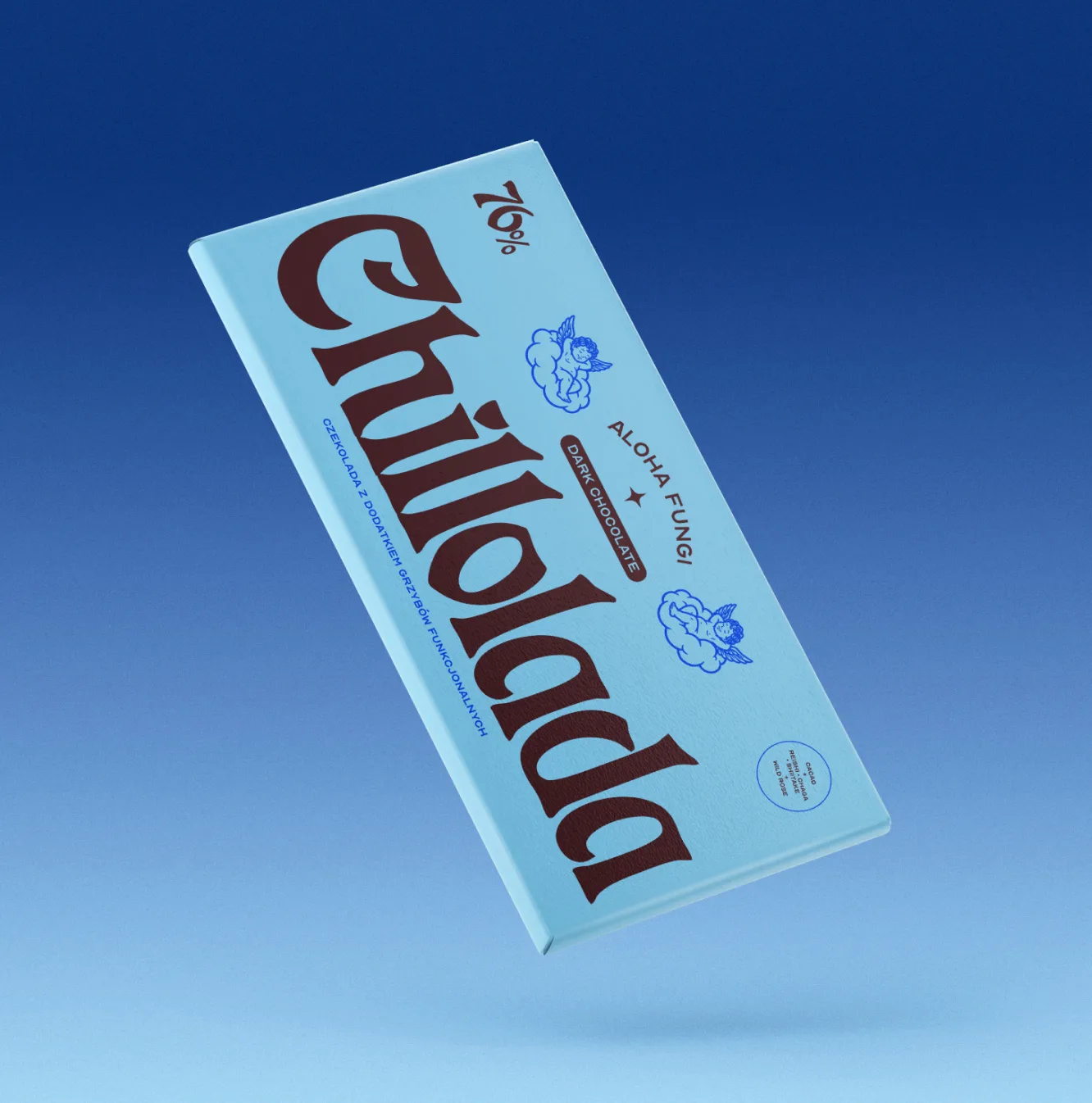
A functional no-added-sugar chocolate based on cacao mass (about 87%), with Reishi, Chaga, Shiitake extracts and wild rose. A composition for the evening, for winding down and an end-of-day ritual.
| Composition | Amount in 90 g |
|---|---|
| Cacao mass | 76.5 g |
| Reishi spore extract | 6.03 g |
| Chaga fruiting-body extract | 2.97 g |
| Shiitake fruiting-body extract | 2.97 g |
| Wild rose fruit powder | 2.43 g |
Total extract and plant-addition content: 14.40 g (16%).
Dose (both): 4 to 8 squares per day (15 to 30 g). Maximum 8 squares = about 4.5 g of extracts. Do not exceed the recommended portion.
Warnings: a food supplement must not be used as a substitute for a varied diet. Not for children, pregnant or breastfeeding women. People taking medication or with chronic conditions should consult a doctor before use. Keep out of reach of small children.
What does it mean for a brand (B2B)?
Functional chocolate is one of the most attractive formats for mushrooms, because it combines a mass-market product with a self-care narrative. If you are considering your own chocolate bar under your own brand, three things matter:
- Raw-material form: fruiting-body extract, not mycelium grown on grain (where most of the mass is starch from the substrate).
- Standardisation and CoA per batch: these decide whether the product can be honestly described and reproduced batch after batch.
- Fit to the format: solubility, taste, colour and stability in the chocolate matrix.
The Seksolada and ChillKolada drop showed that this is a very interesting direction, and the people who tried our chocolates keep asking when we will restock. Let’s talk about your product →
FAQ
How is functional chocolate different from regular chocolate?
It flips the proportions: high cacao content (70 to 100%) carries the taste and polyphenols, and the place of excess sugar is taken by active ingredients, meaning functional mushroom extracts and adaptogens.
How big is the functional chocolate market?
Around 5bn USD in 2025, projected to grow to about 9bn USD by 2033 at a CAGR of about 7% (Emergen Research; Market Report Analytics). Some analyses cite a pace of up to 8.9% per year through 2034.
How much extract was in the chocolates from our drop?
Seksolada: 13.5 g of extracts per 90 g bar (15%), Cordyceps and Lion’s Mane at 6.75 g each. ChillKolada: Reishi 6.03 g, Chaga 2.97 g, Shiitake 2.97 g and wild rose fruit powder 2.43 g, 14.40 g (16%) in total.
What should you watch out for with your own mushroom chocolate?
The raw-material form (fruiting-body extract, not mycelium on grain), standardisation with a CoA per batch, and fit to the chocolate matrix: solubility, taste, colour and stability.
Read also
Have specific requirements?
Build a procurement brief: catalog match, missing inputs and a ready inquiry draft. Nothing is sent.